


For novelists
You and invented teammates (sample data) flag flaws; AI fixes.
- Sample manuscript, listened to
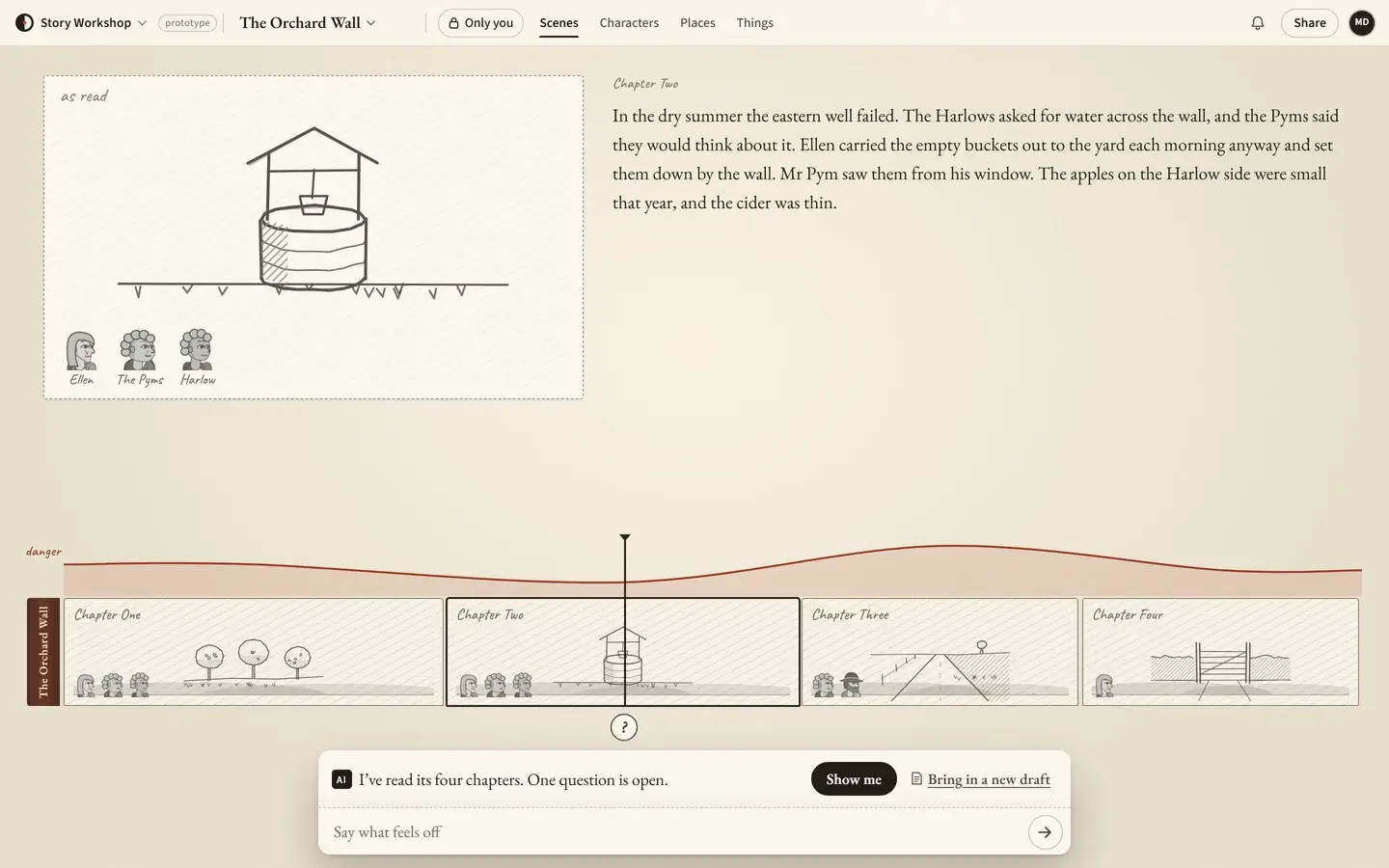
A sample manuscript, read.
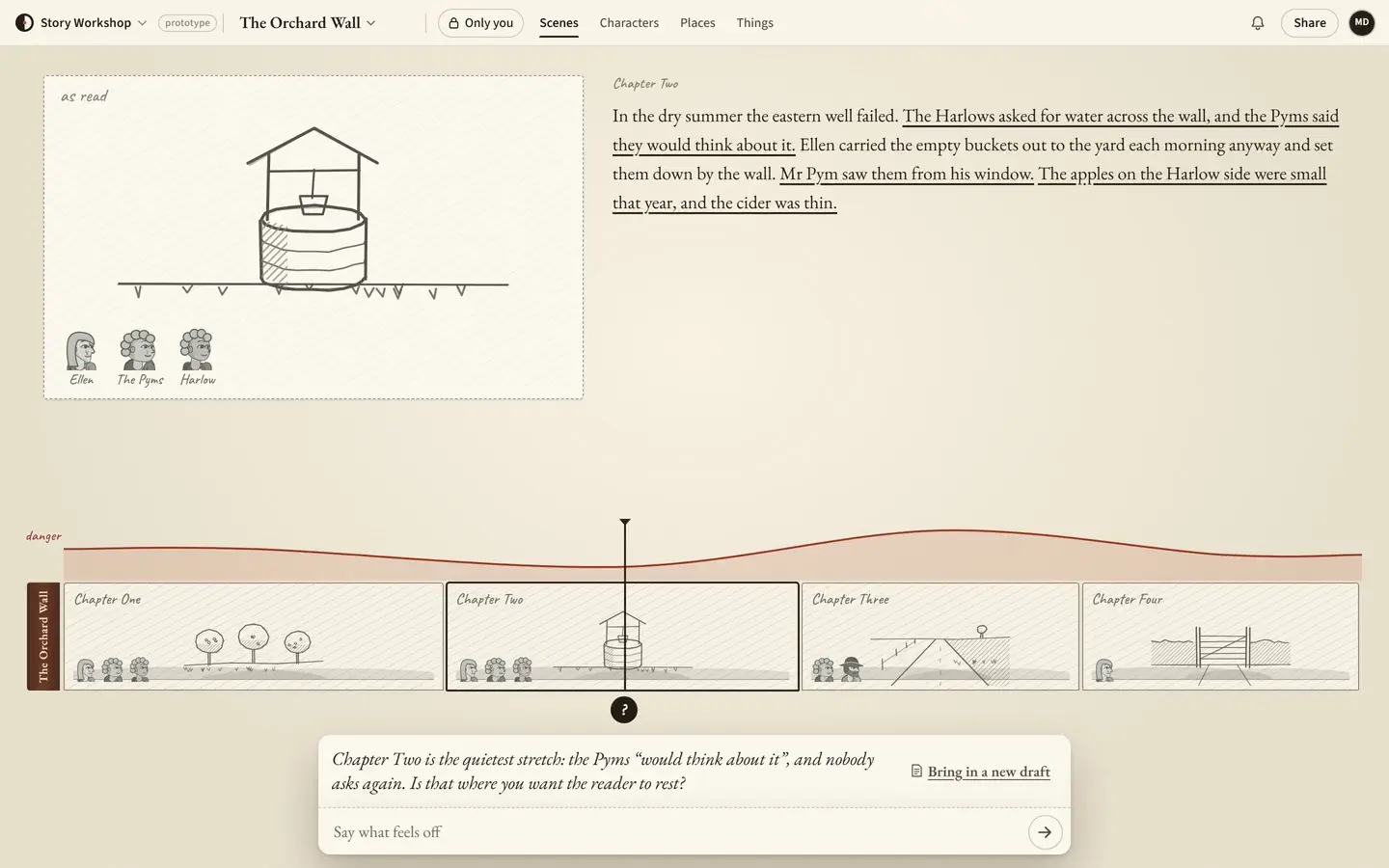
One question, its evidence in your sentences.
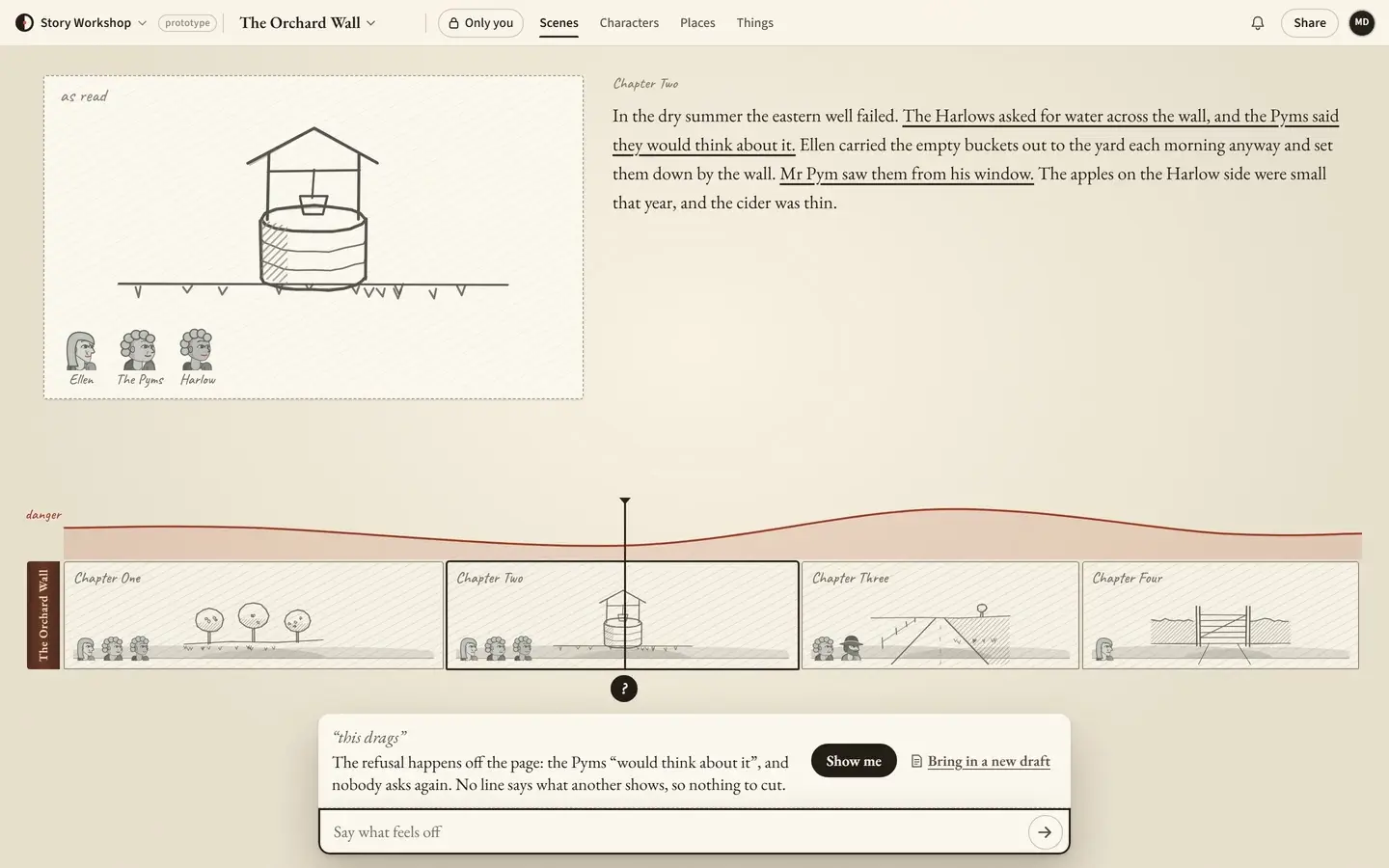
“This drags”: a reason from your own chapter.
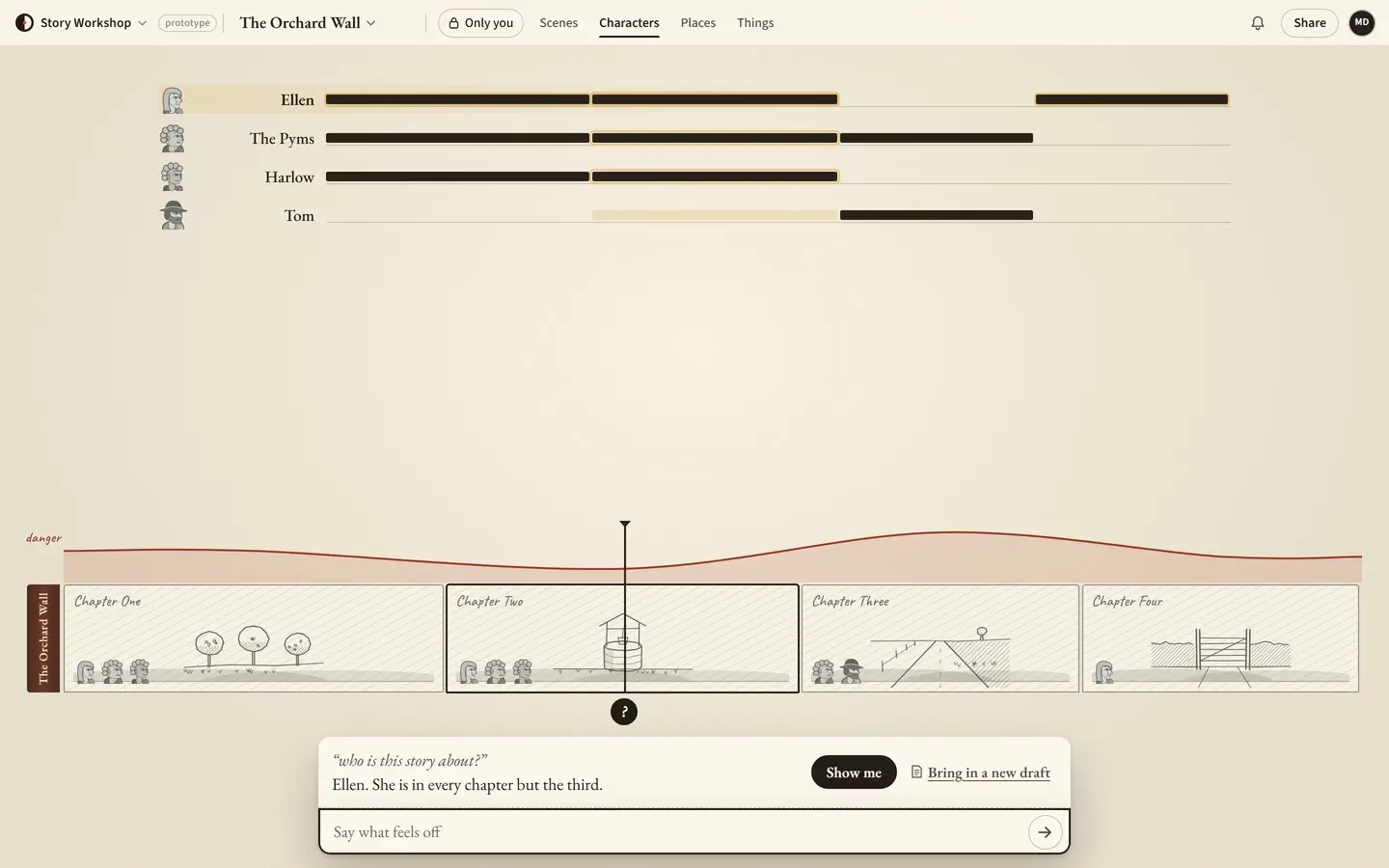
Who it is about, from the lanes it read.
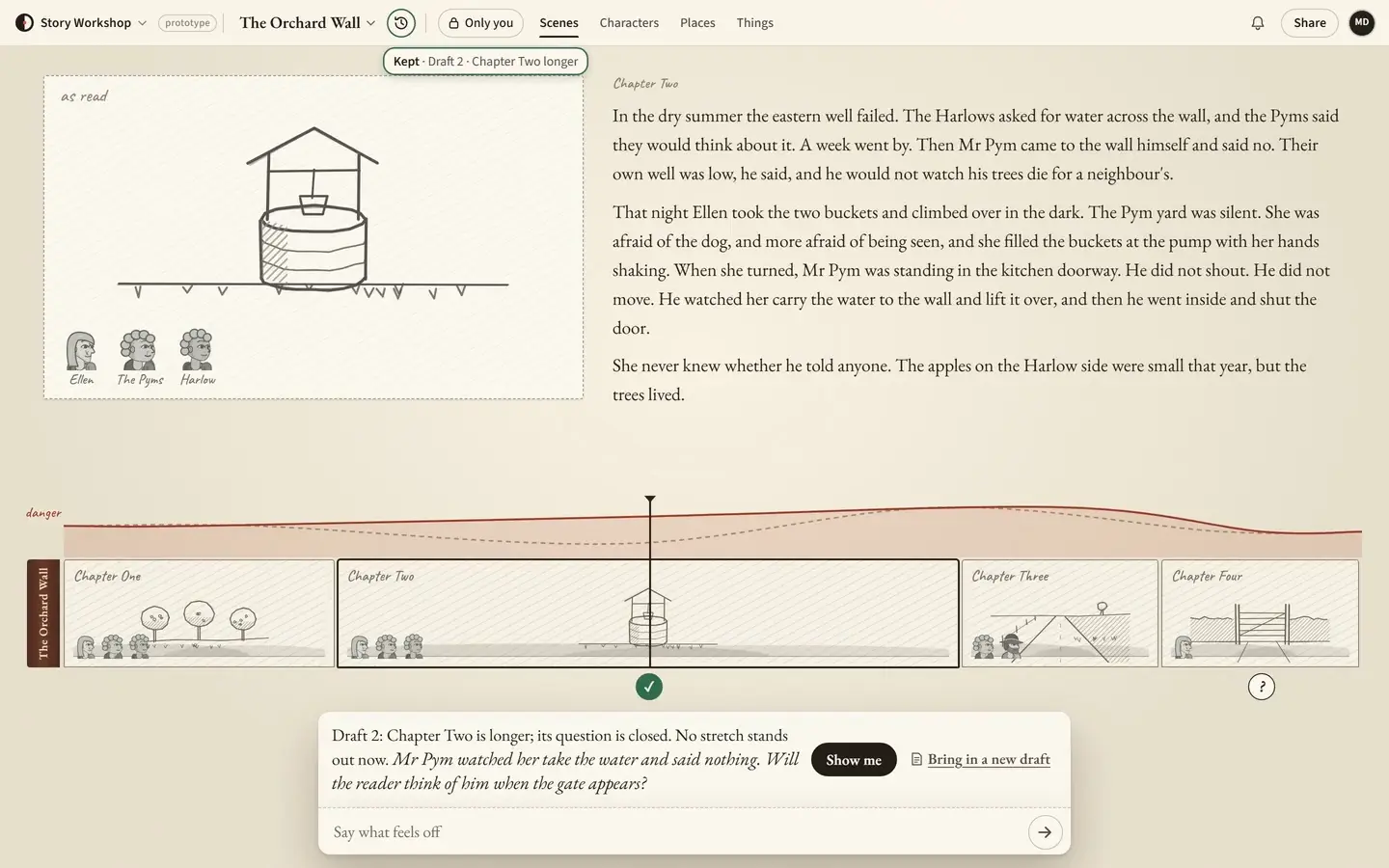
Draft 2: old ridge in pencil, question closed.
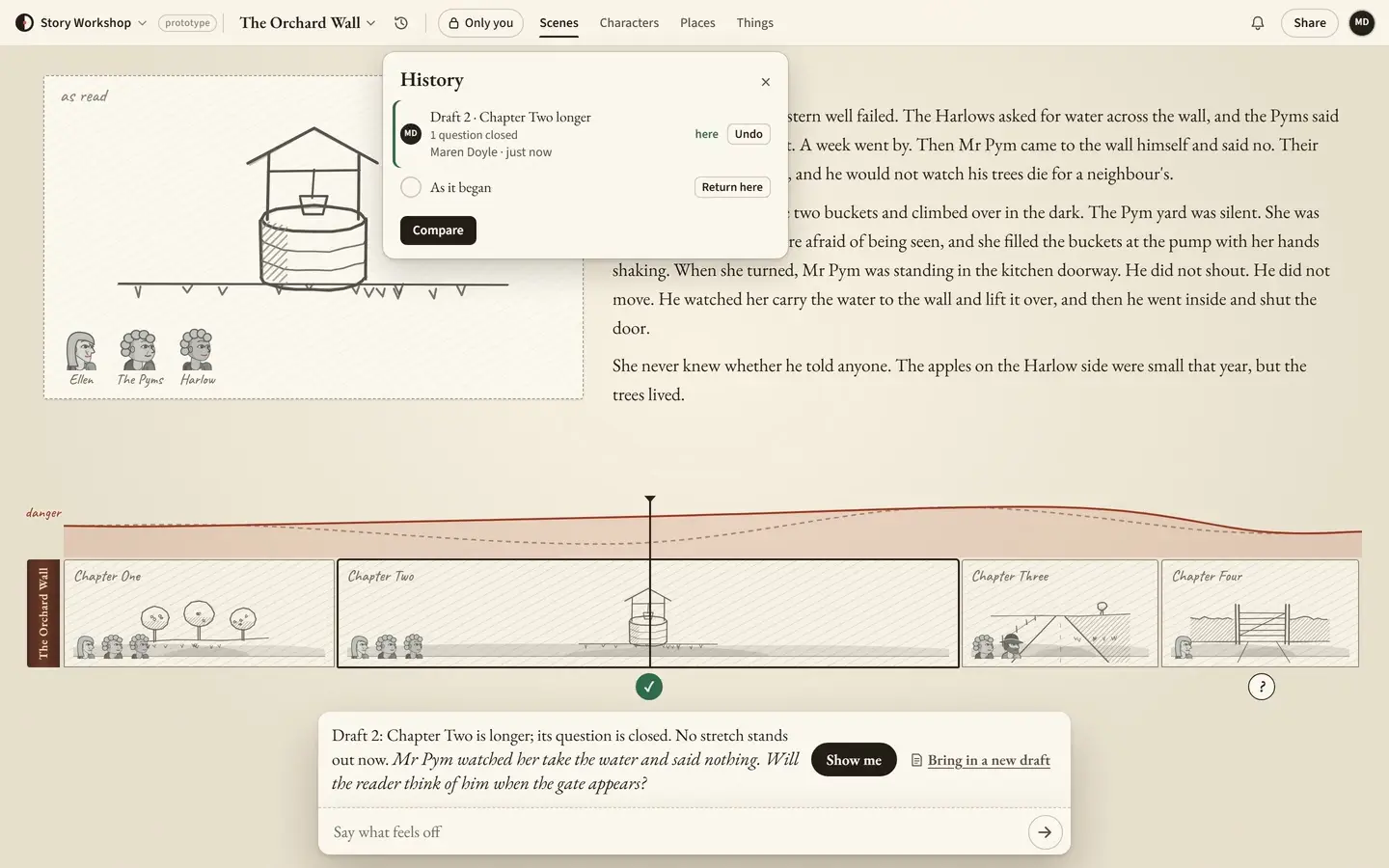
History: the draft, and what it closed.
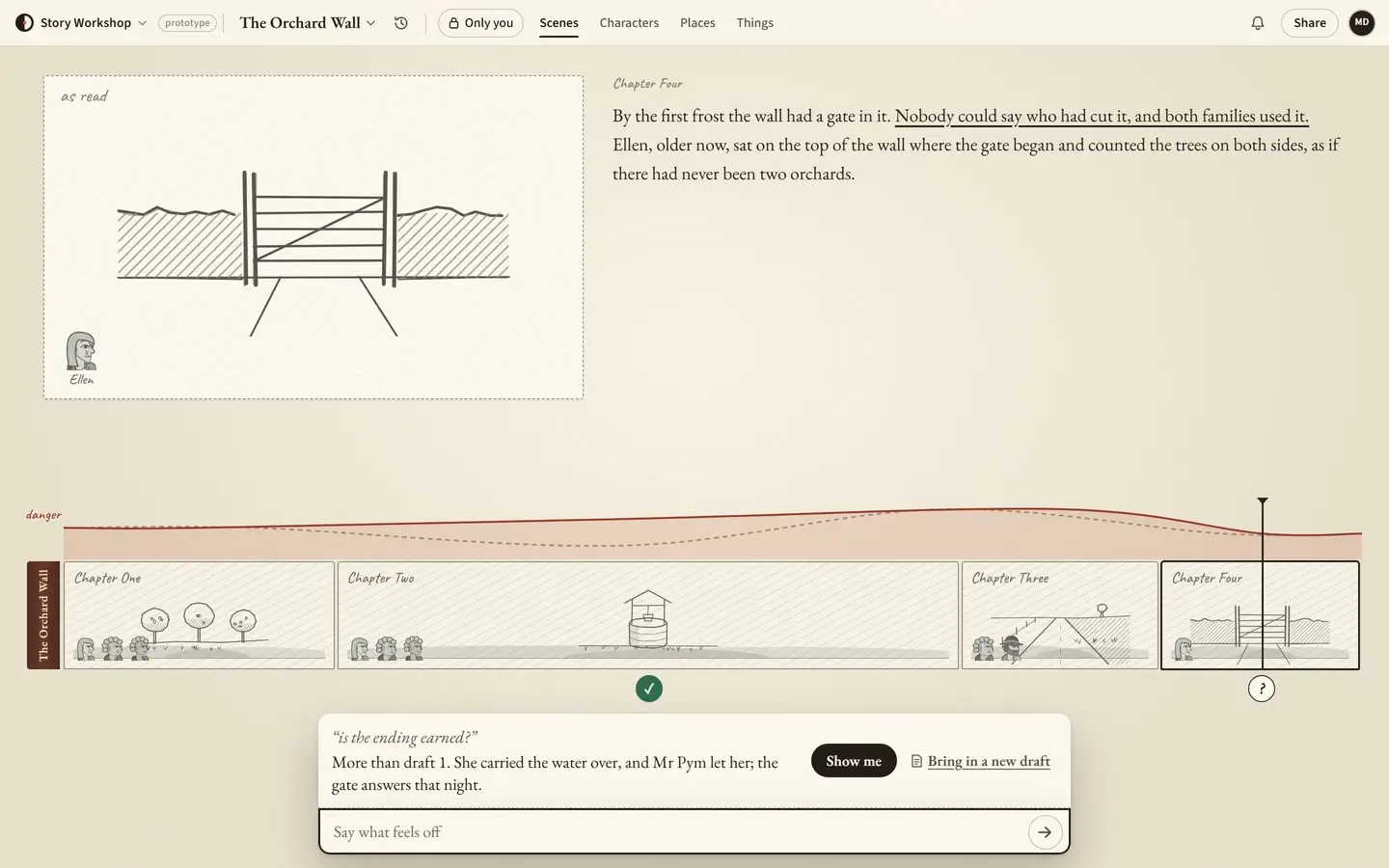
Asked again: the answer moves with the book.
- Less text, and a bar that keeps its place
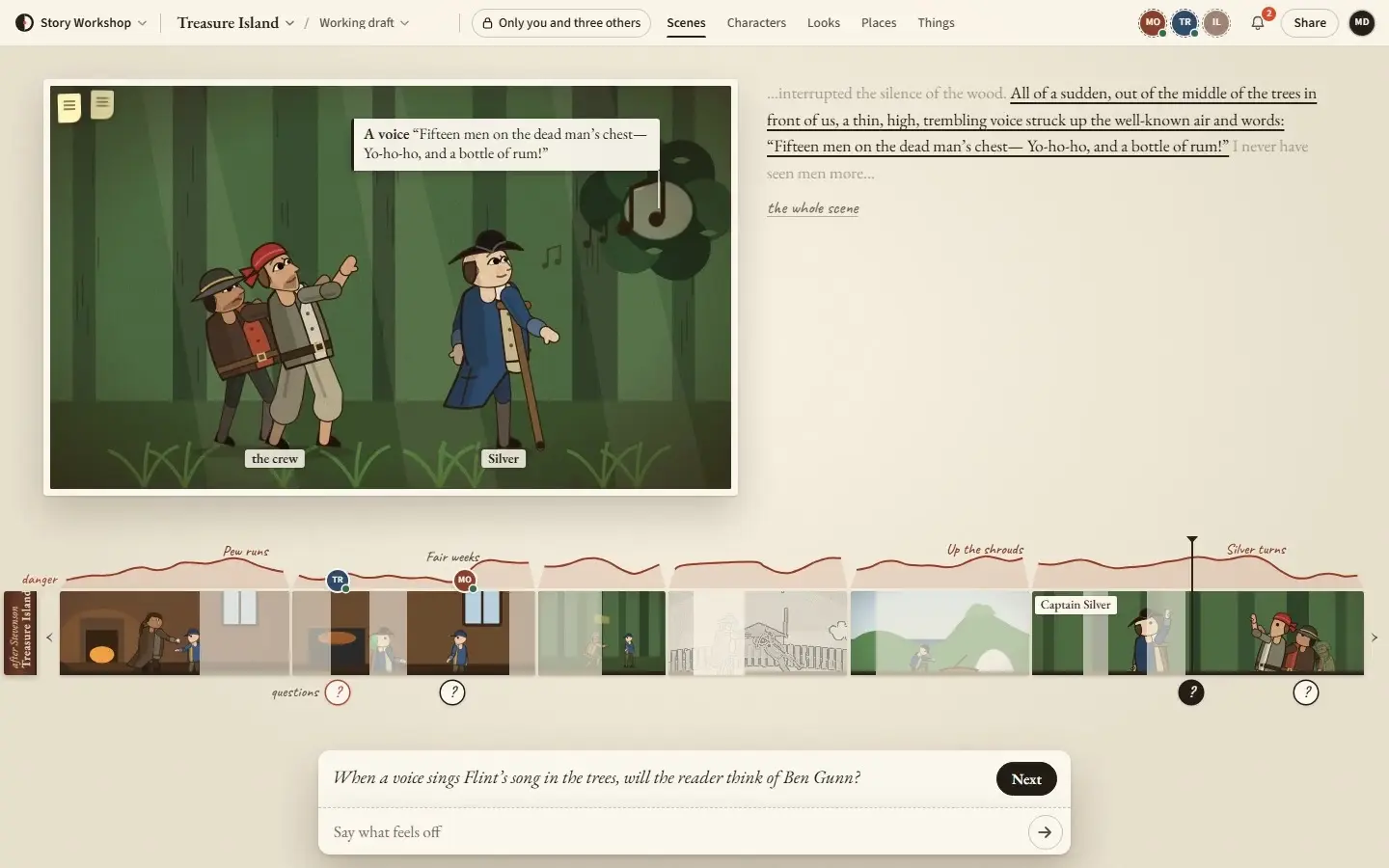
The passage the picture draws, in ink.
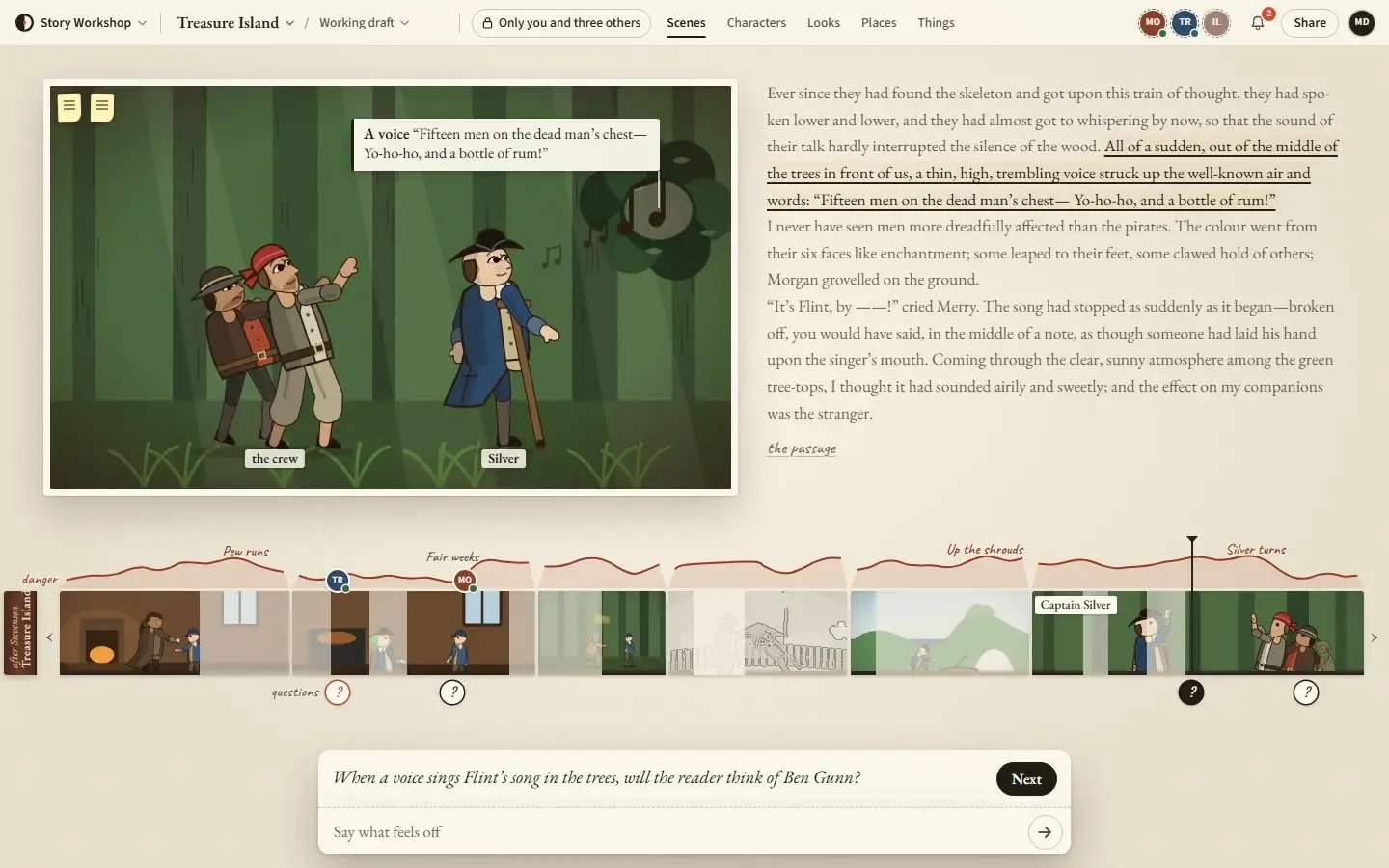
The whole scene opens.
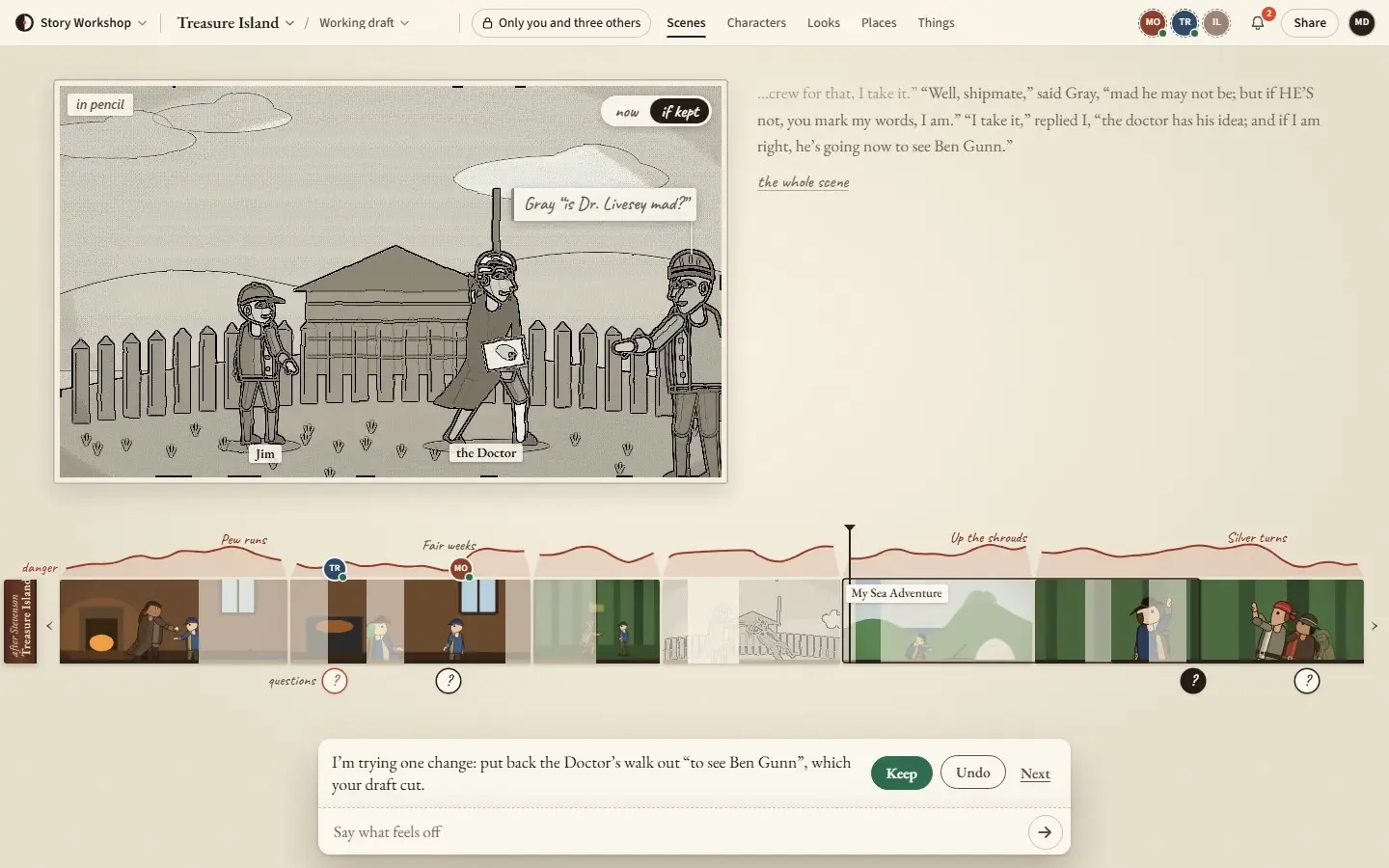
A change in pencil, in the book’s own face.
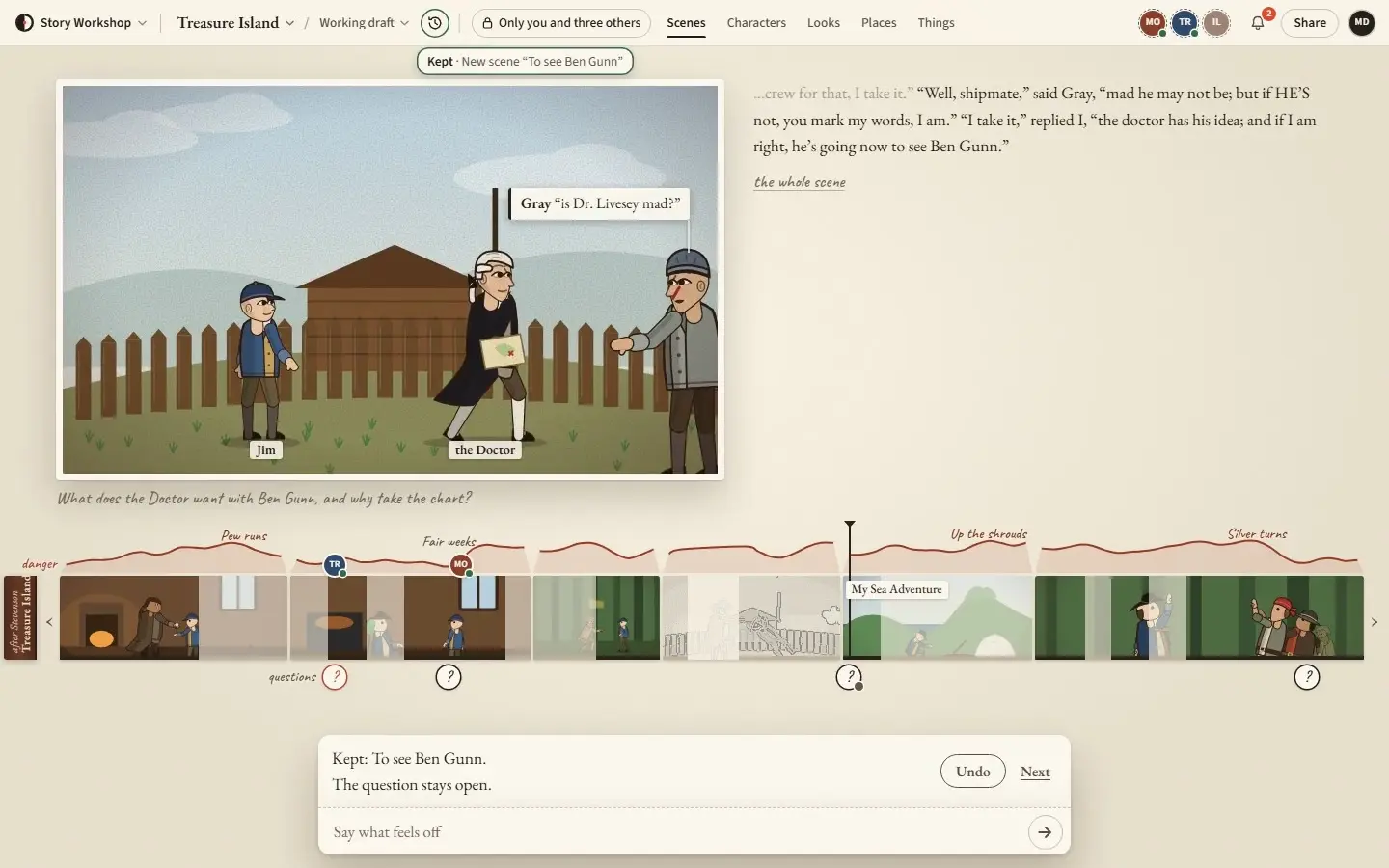
Kept; its question stays open.
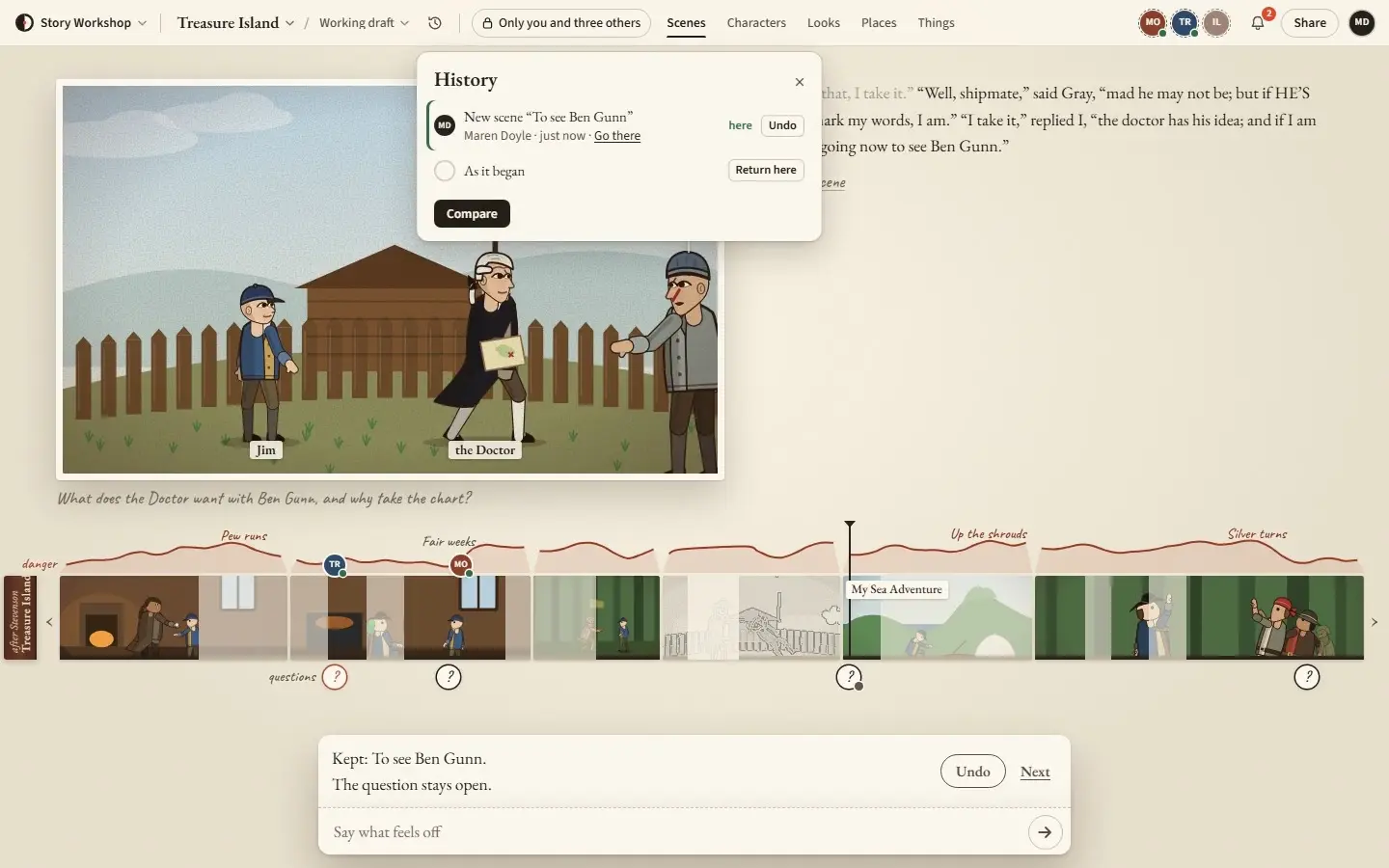
History opens; the bar keeps its place.
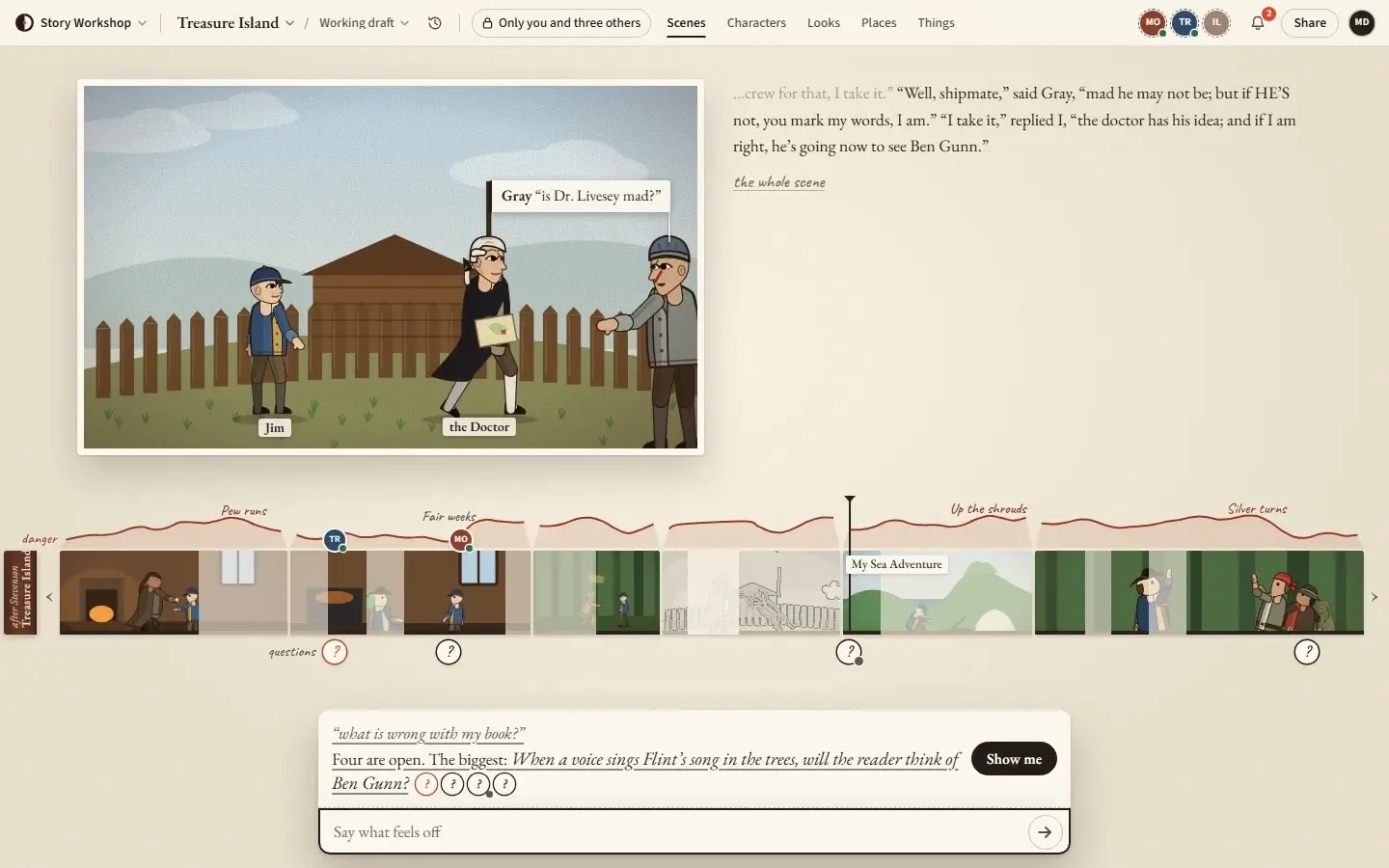
What is open in the book, biggest first.
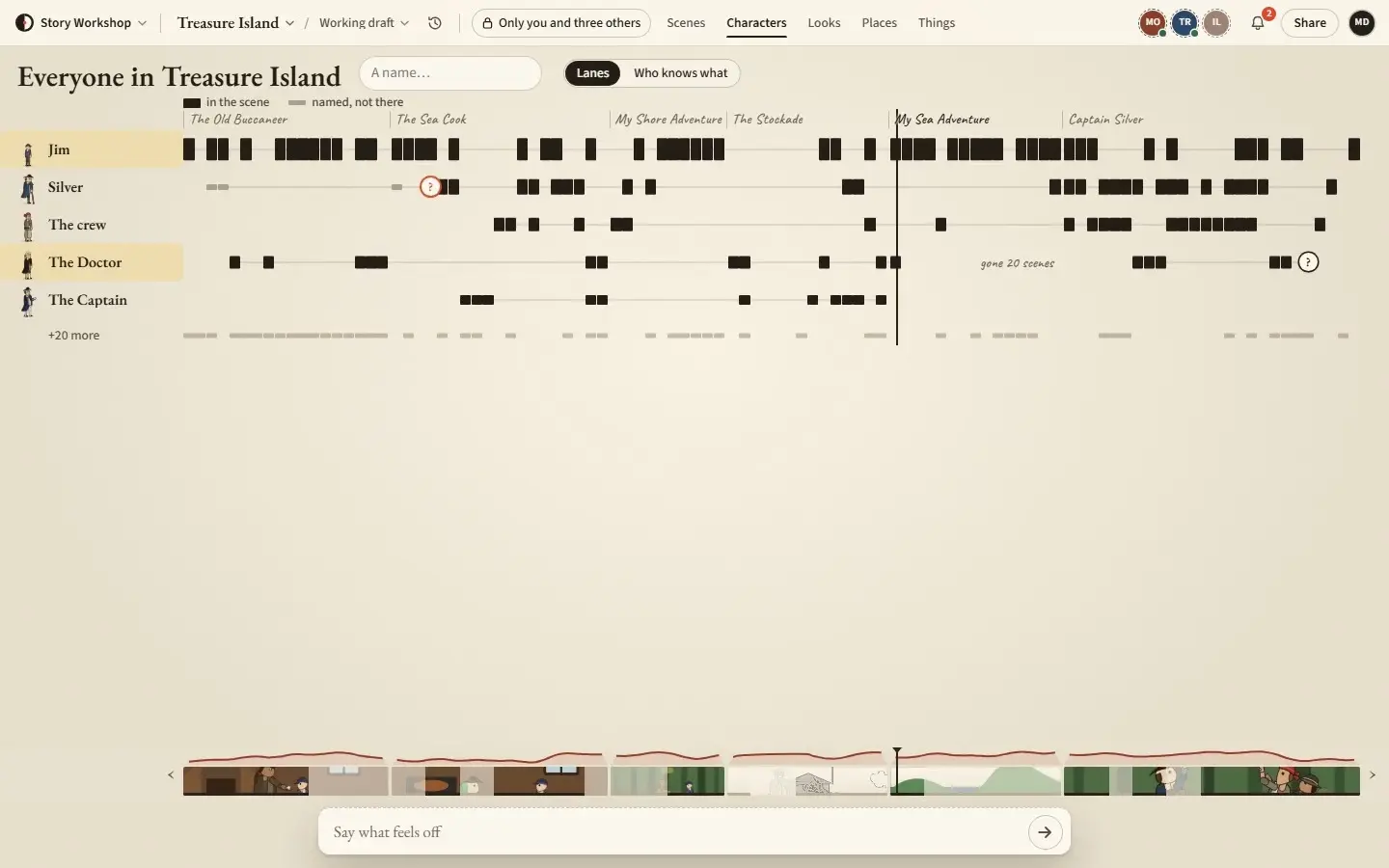
Who carries the book; the Doctor gone 20 scenes.
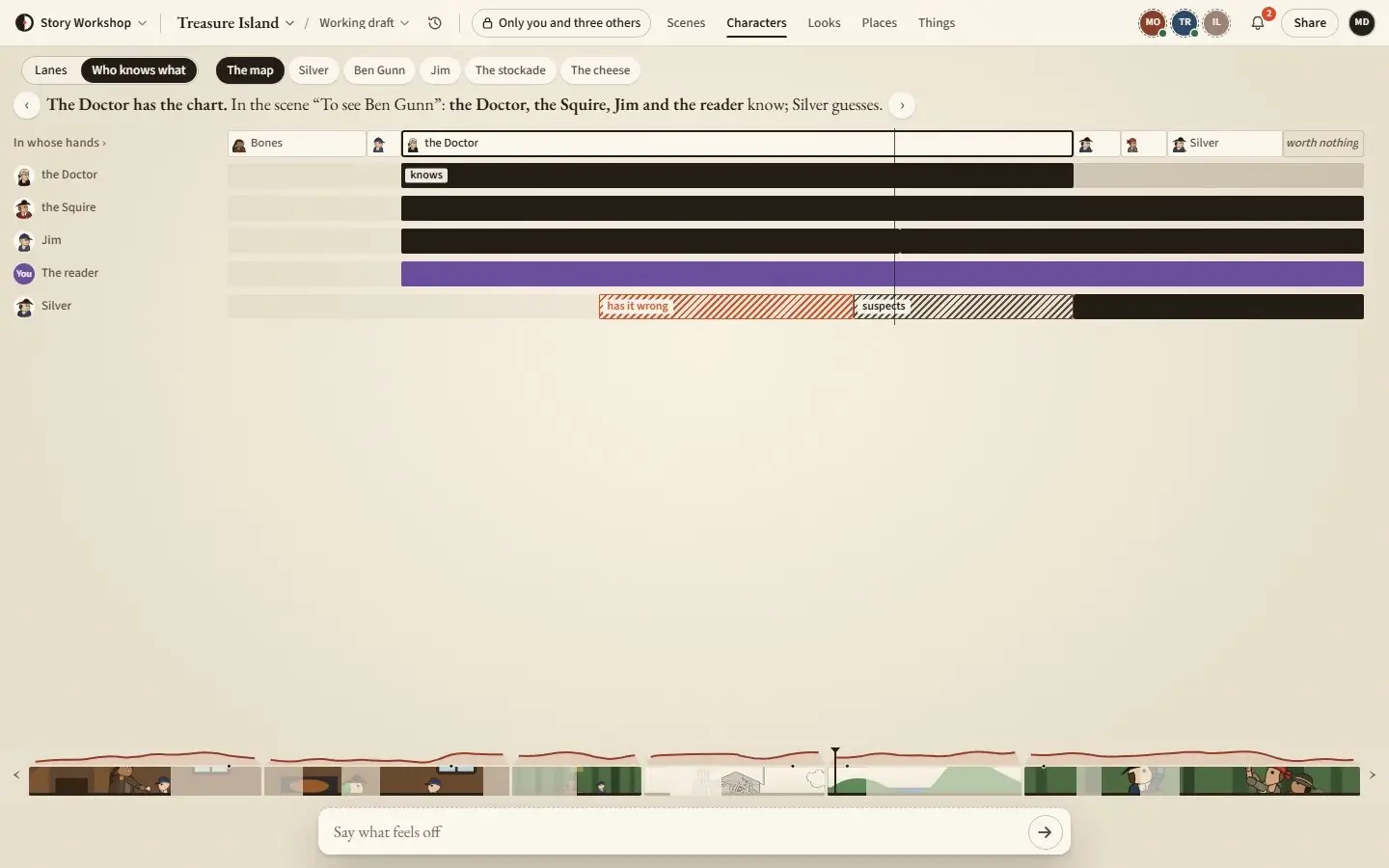
Who knows what, at the scene in hand.
- Around the story
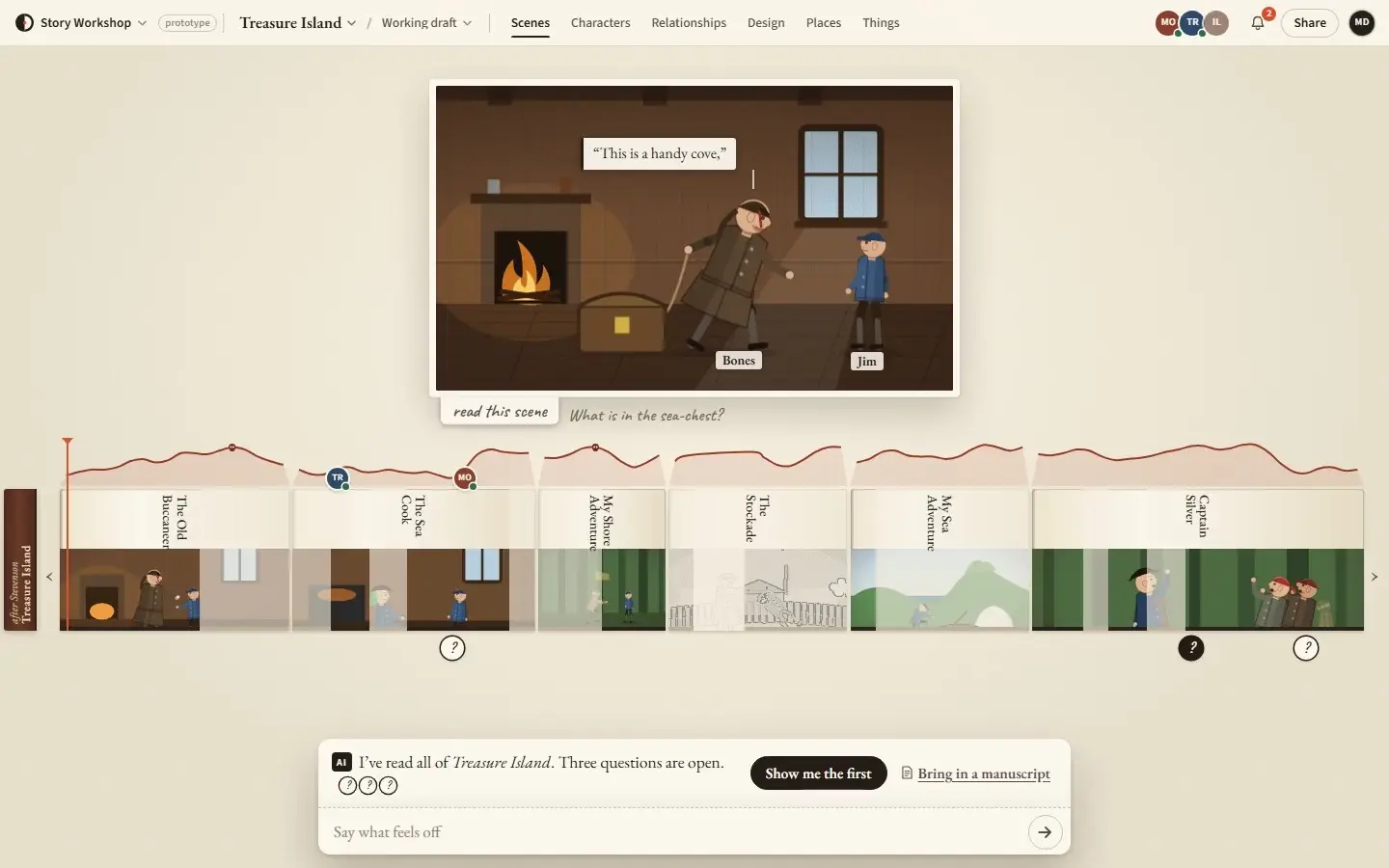
Story Workshop: the work, and the software around it.
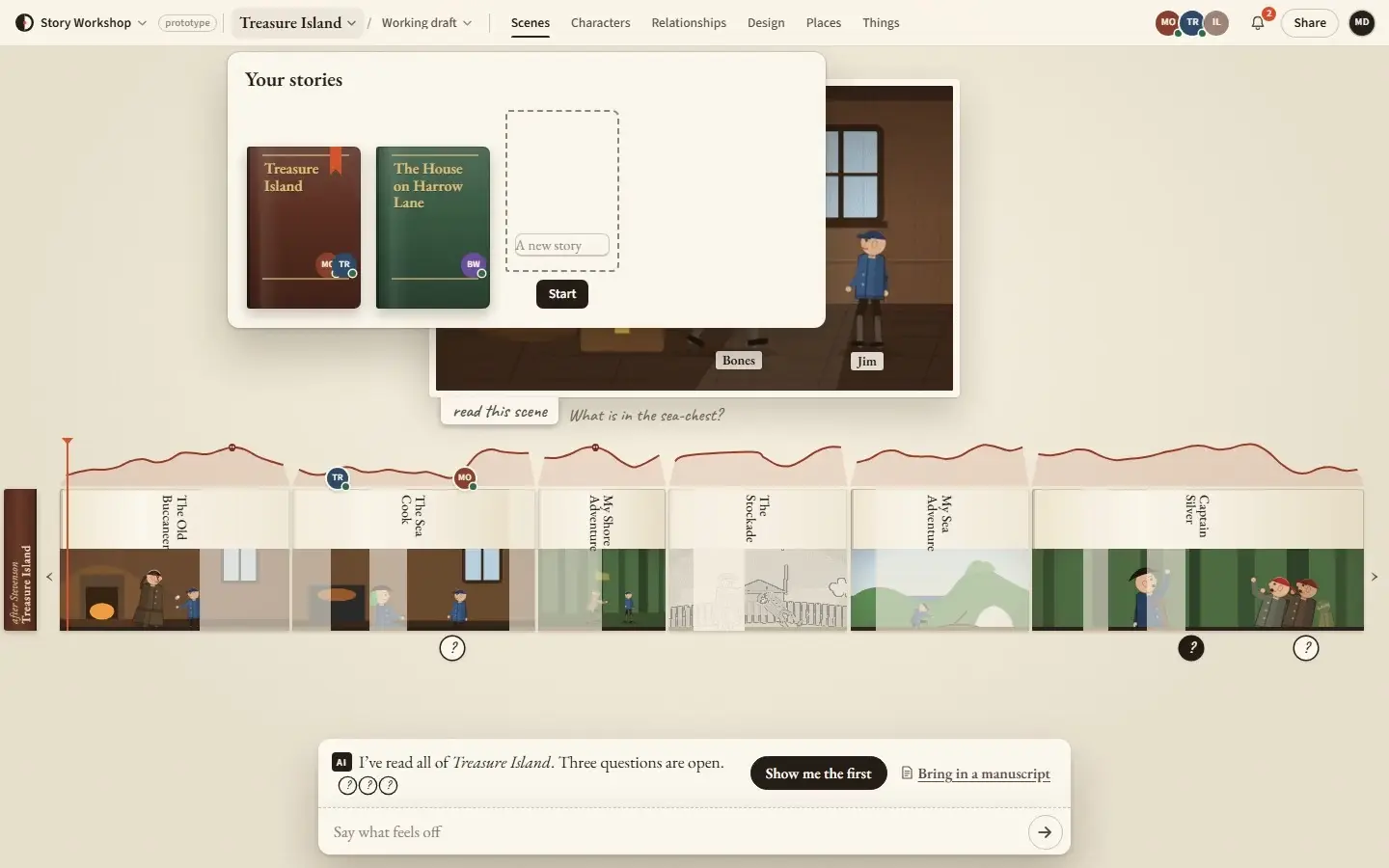
Your stories, each one real.
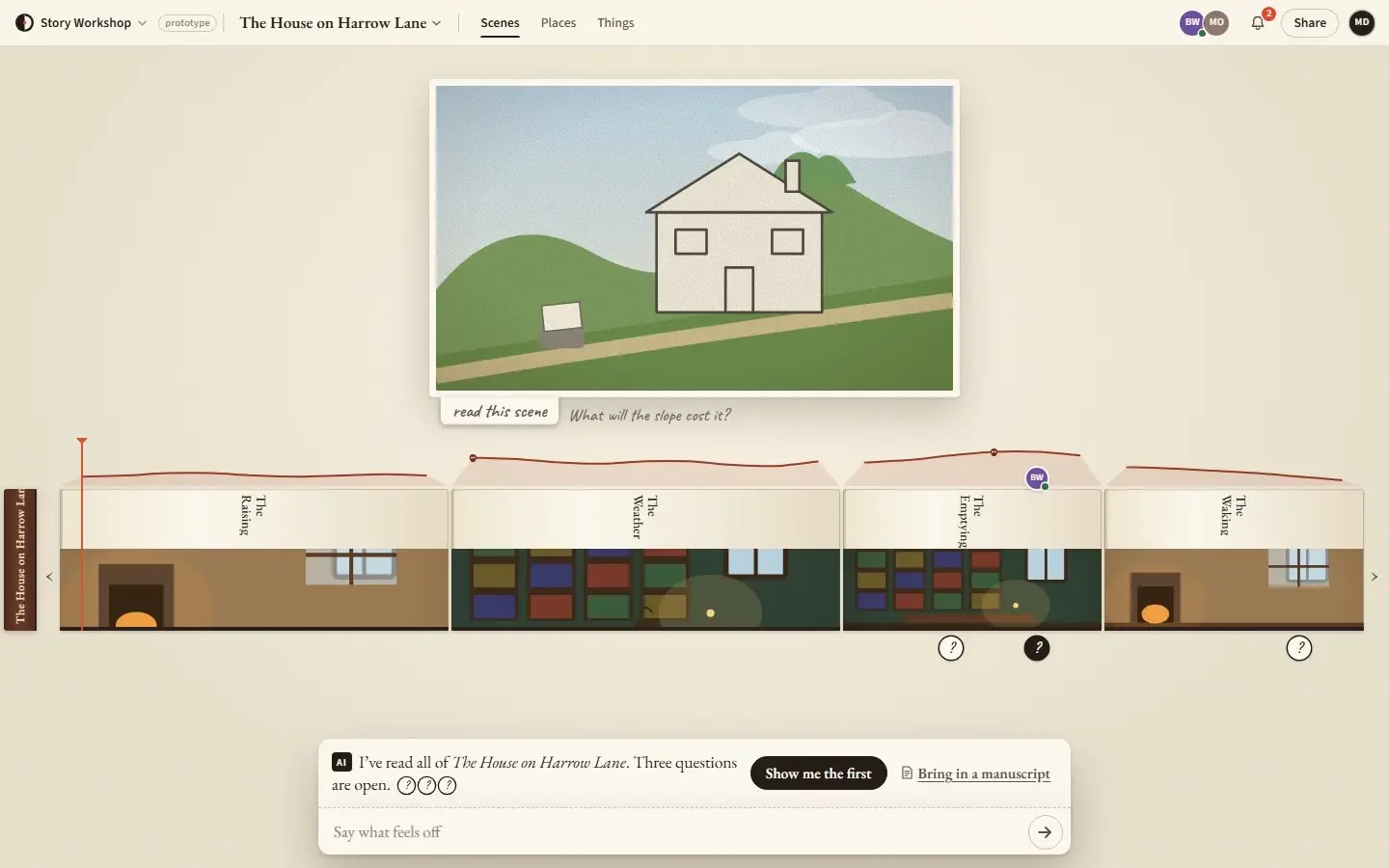
Switch story: The House on Harrow Lane.
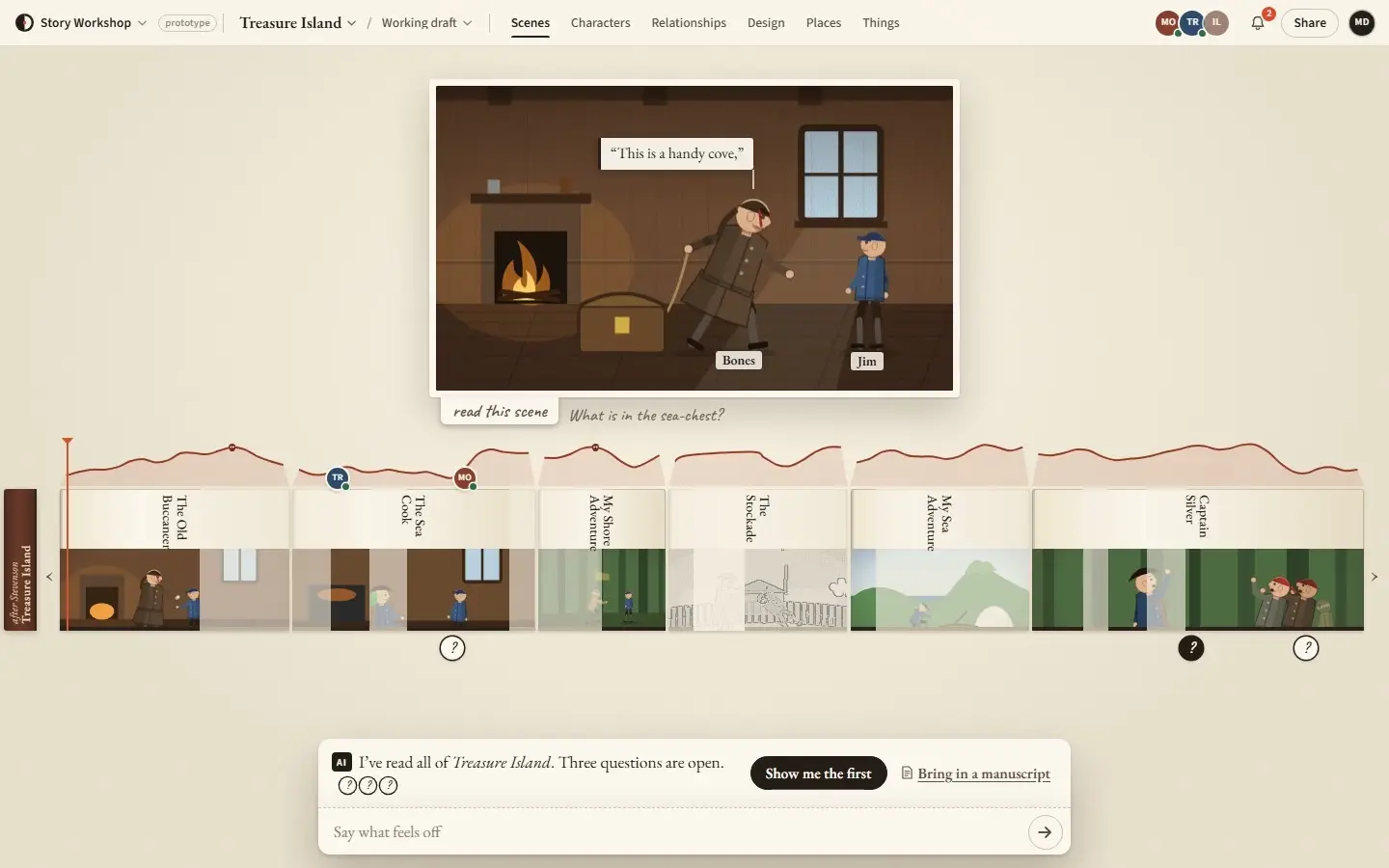
And back.
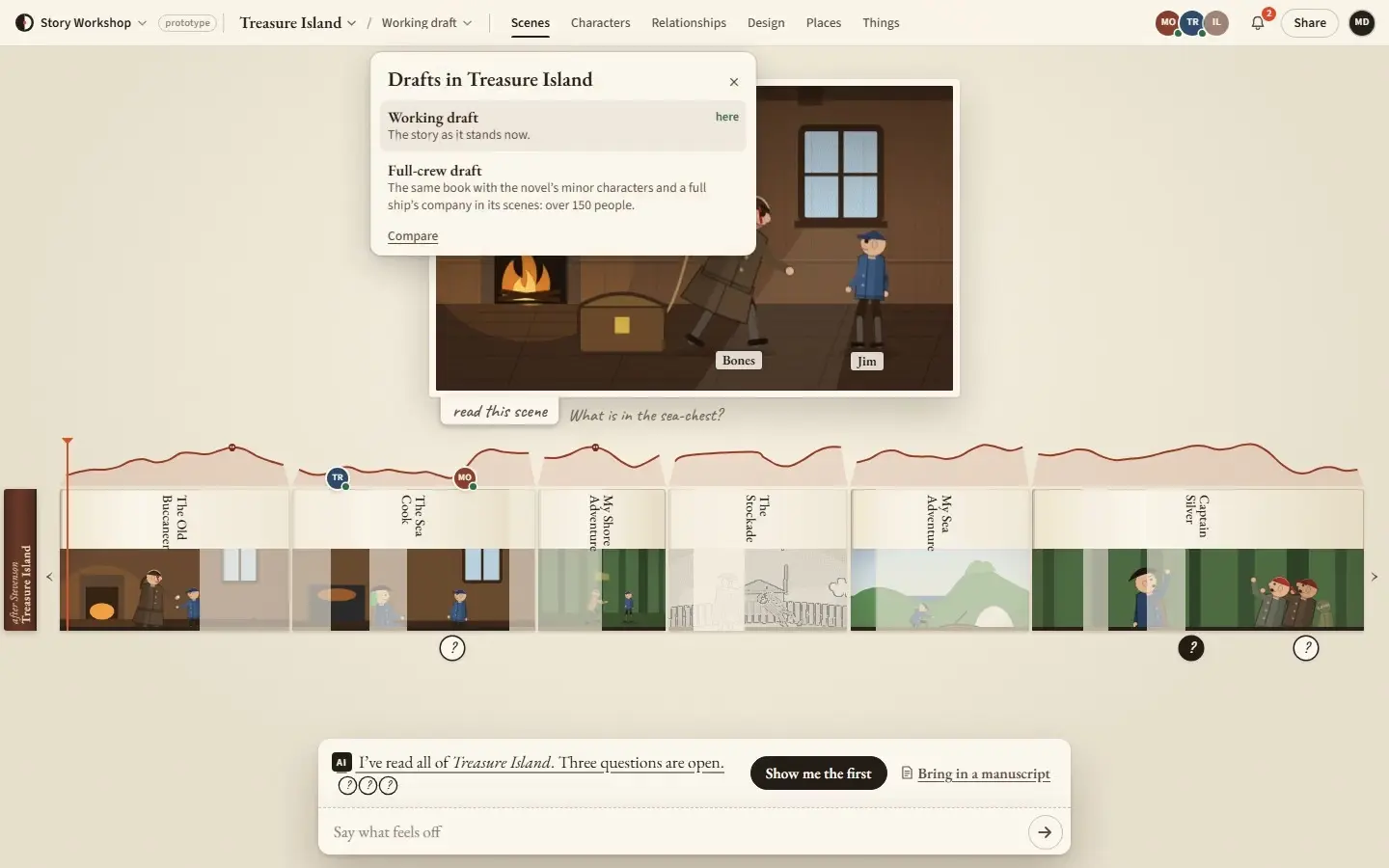
Drafts: versions of one story.
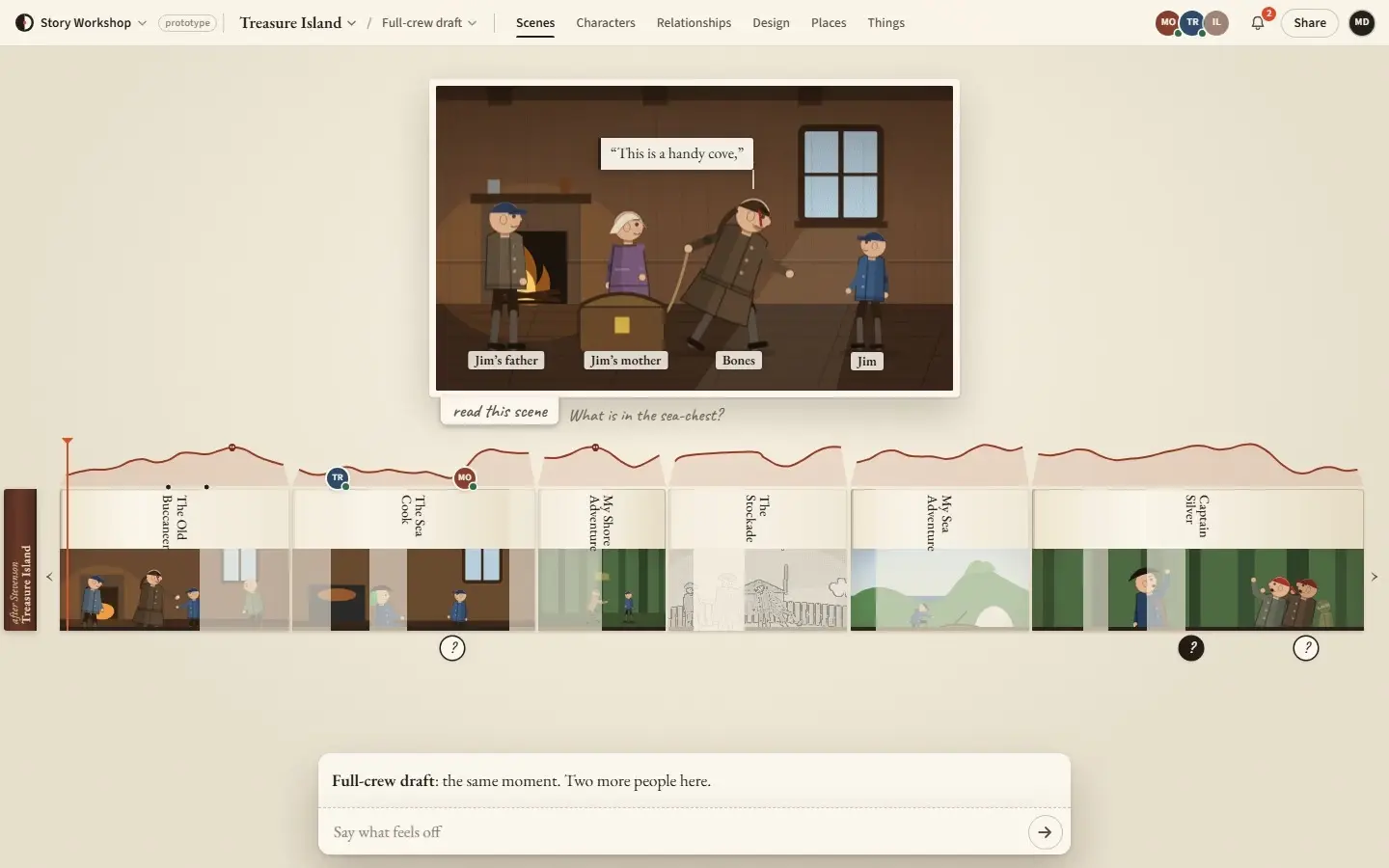
The full-crew draft, at the same moment: three more people here.
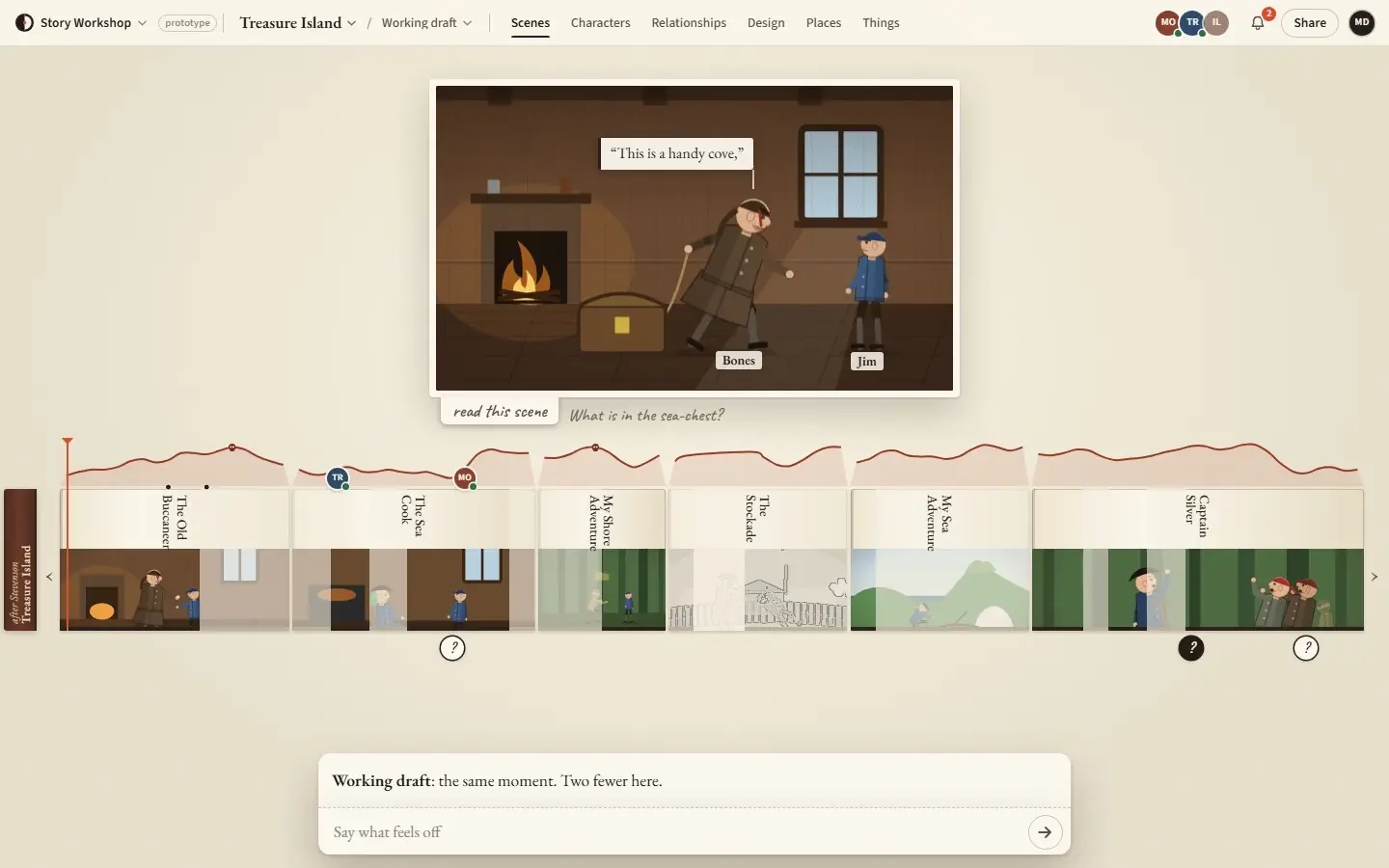
Back to the working draft, still at that moment.
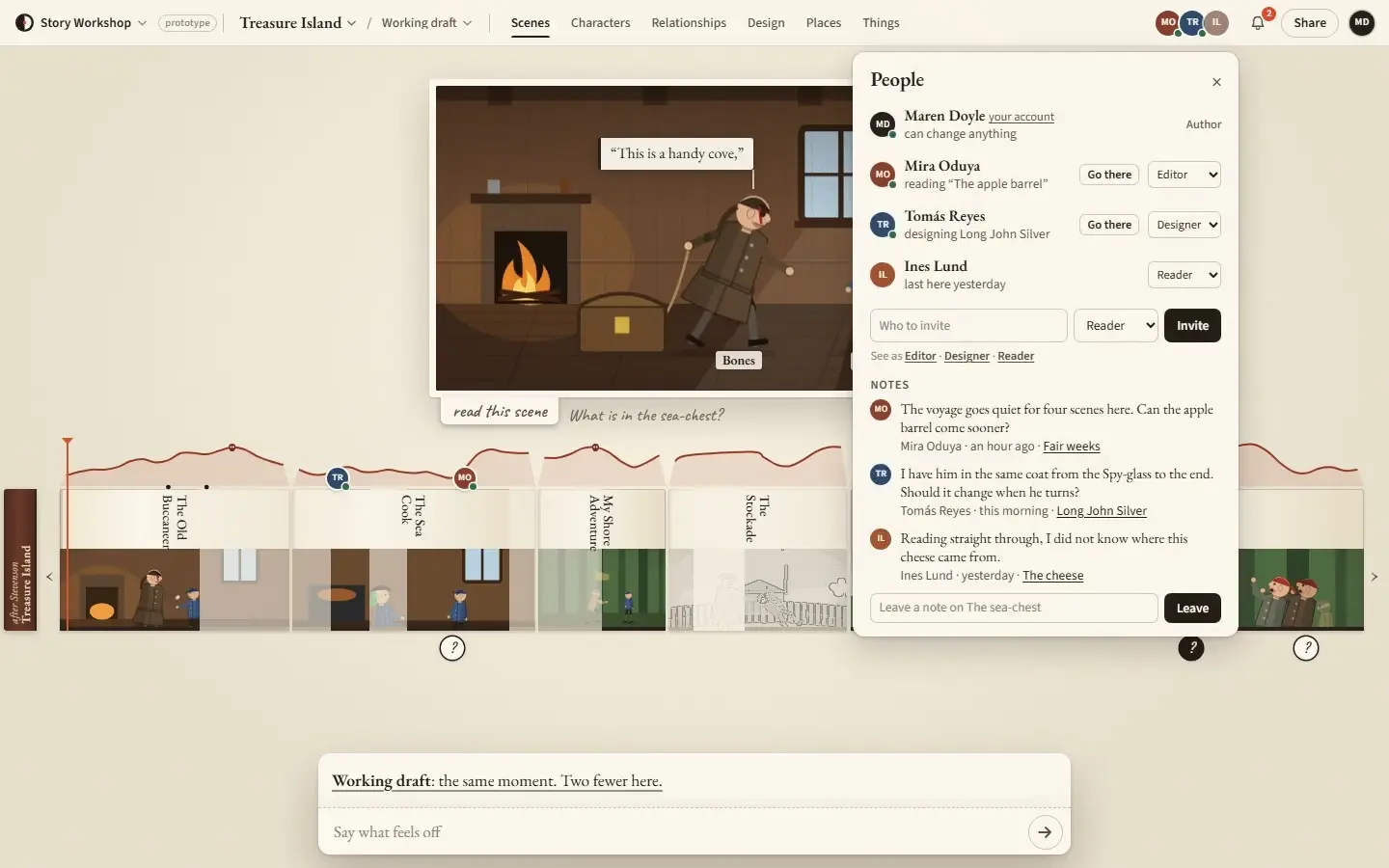
Invented teammates, and what each is doing.
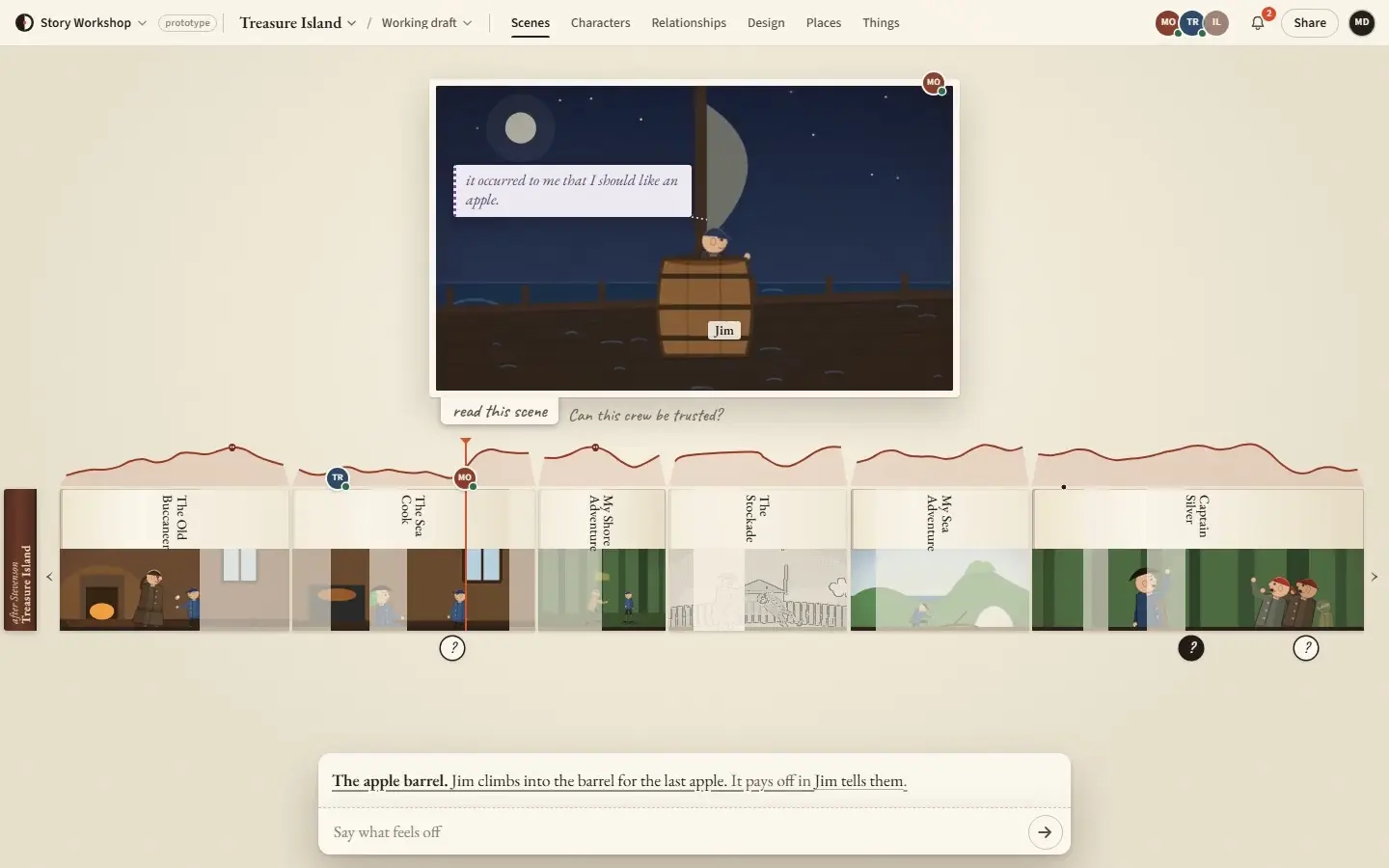
Go there: the scene Mira is reading.
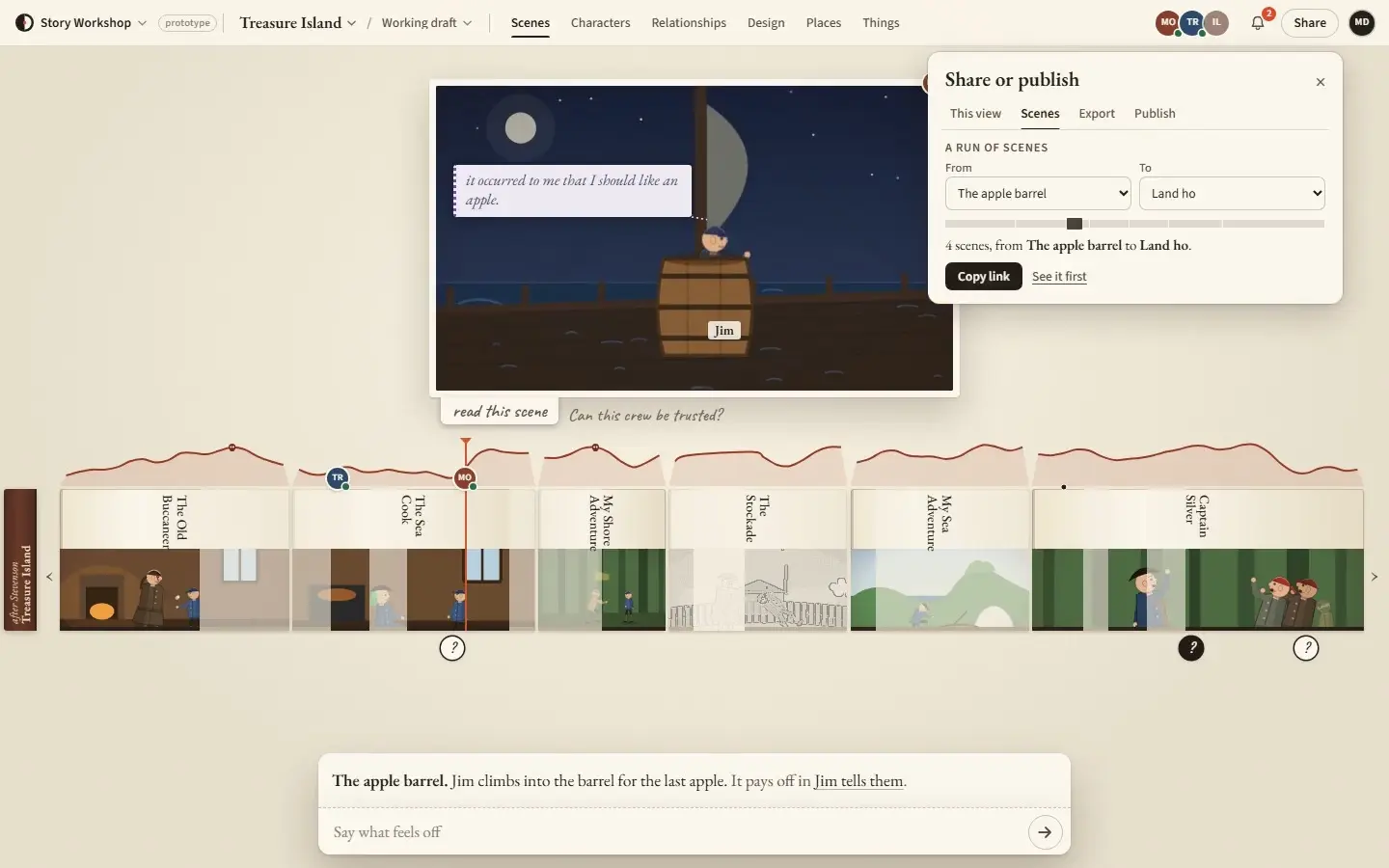
Share a run of scenes.
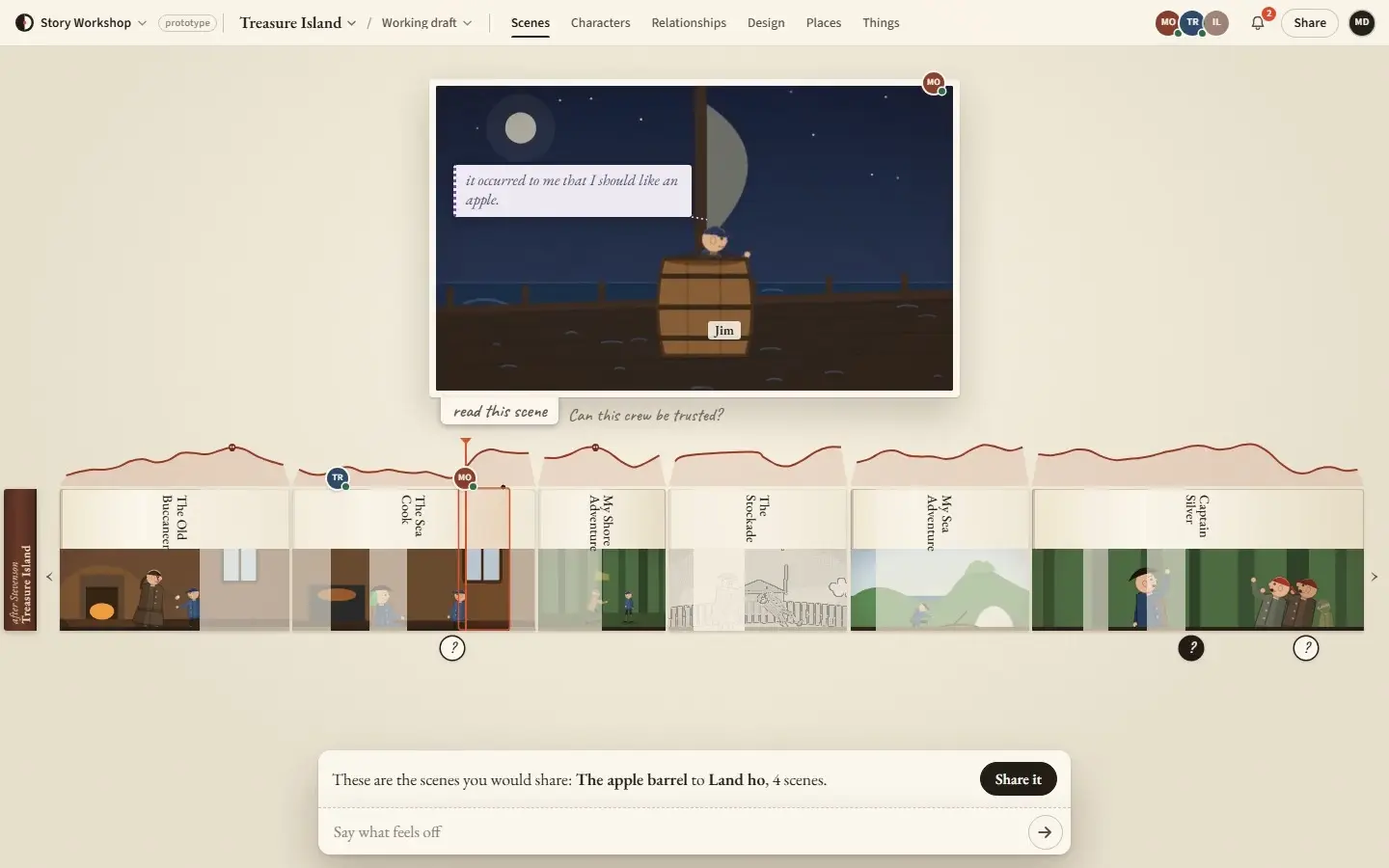
See it first, on the work.
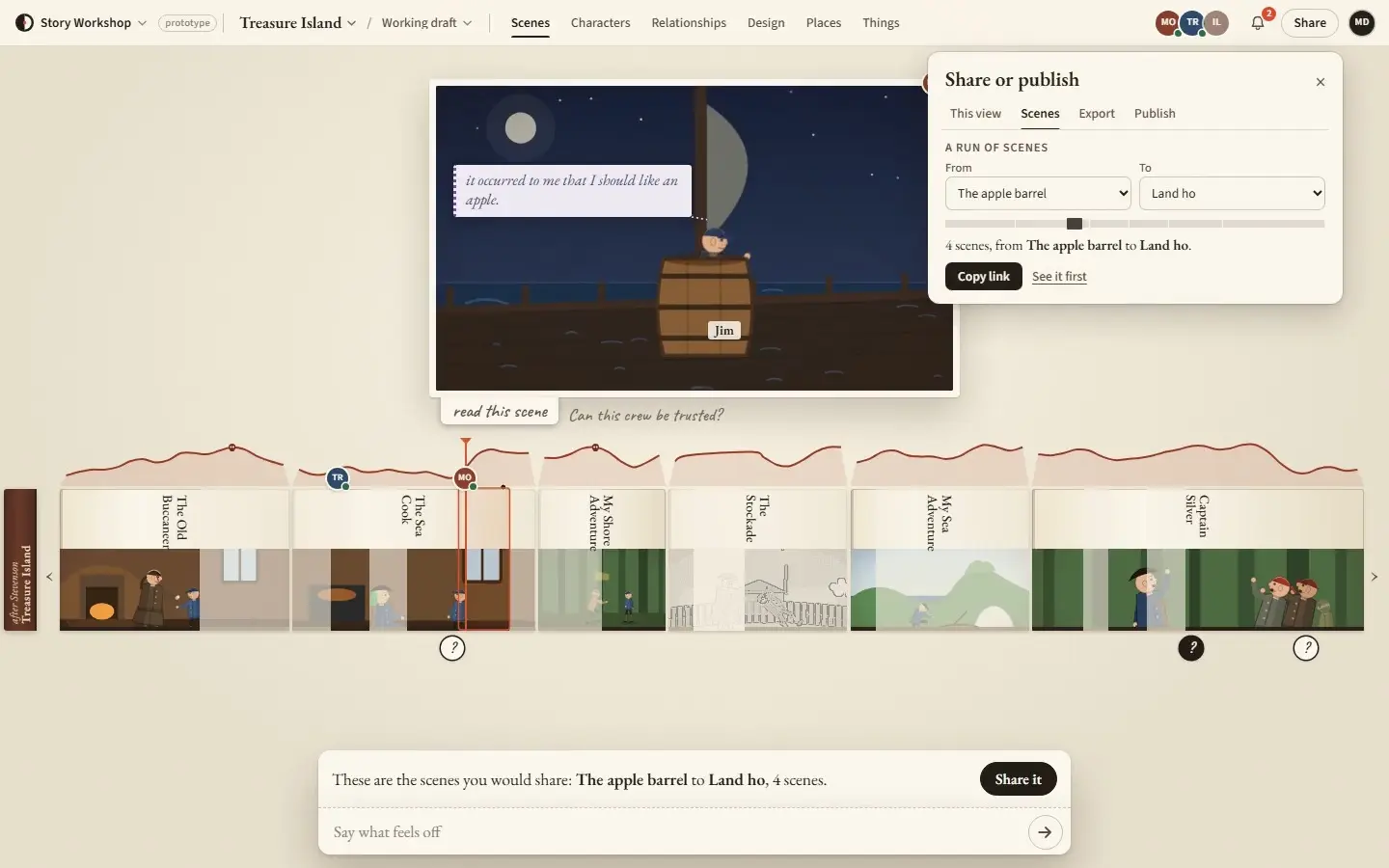
Share it: the same run of scenes.
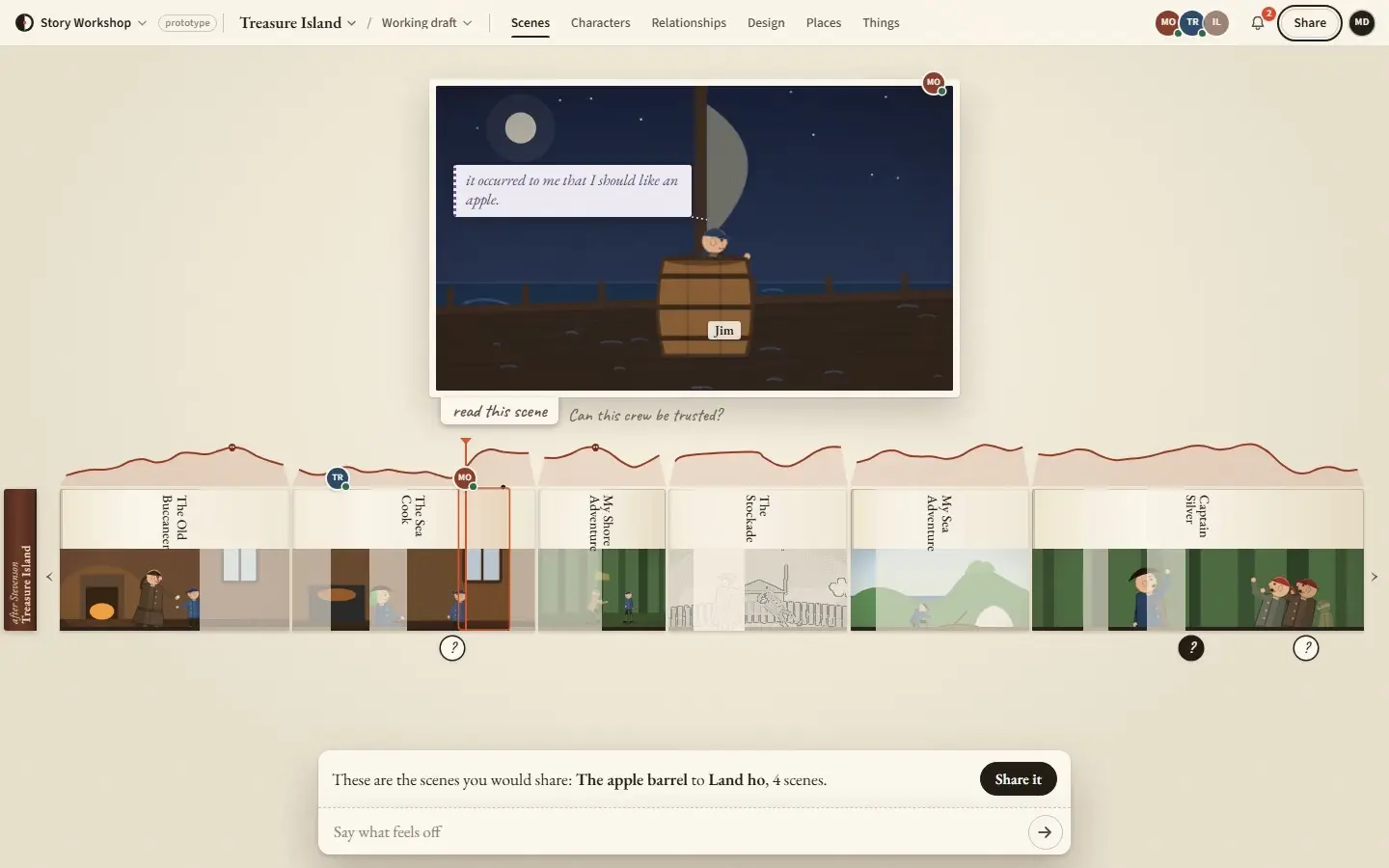
Its link, copied.
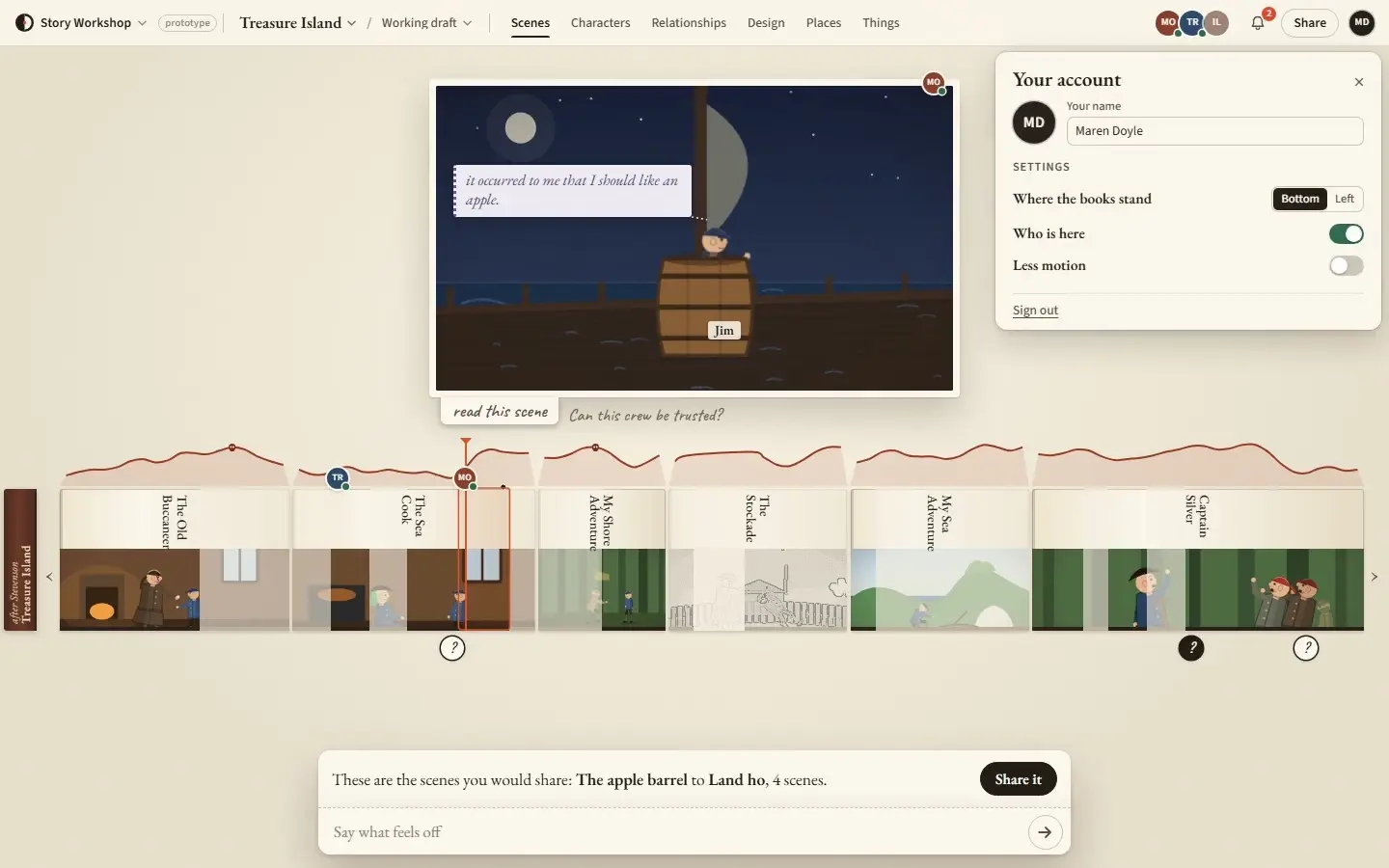
Your account and settings.
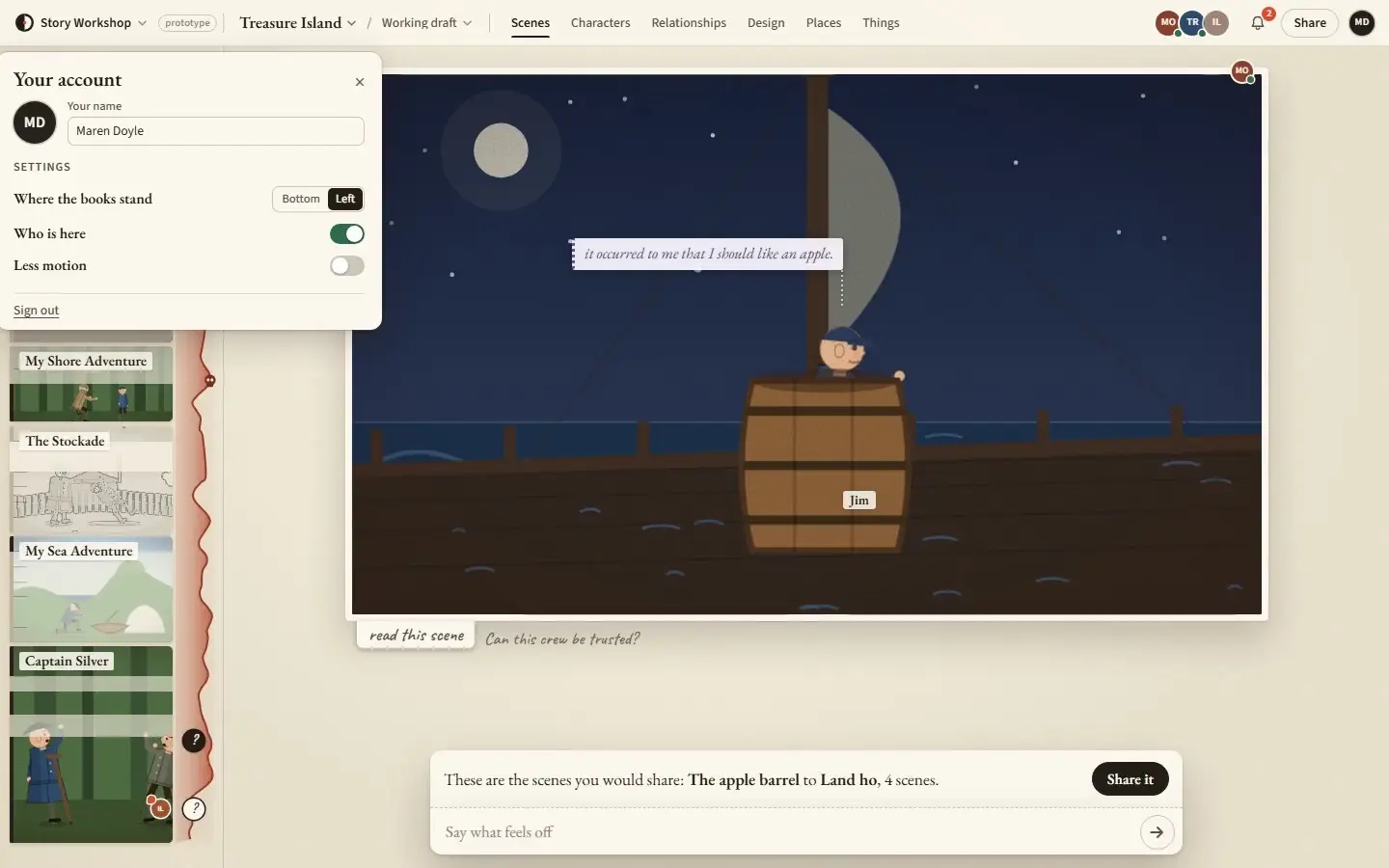
A setting moves the books along the left.
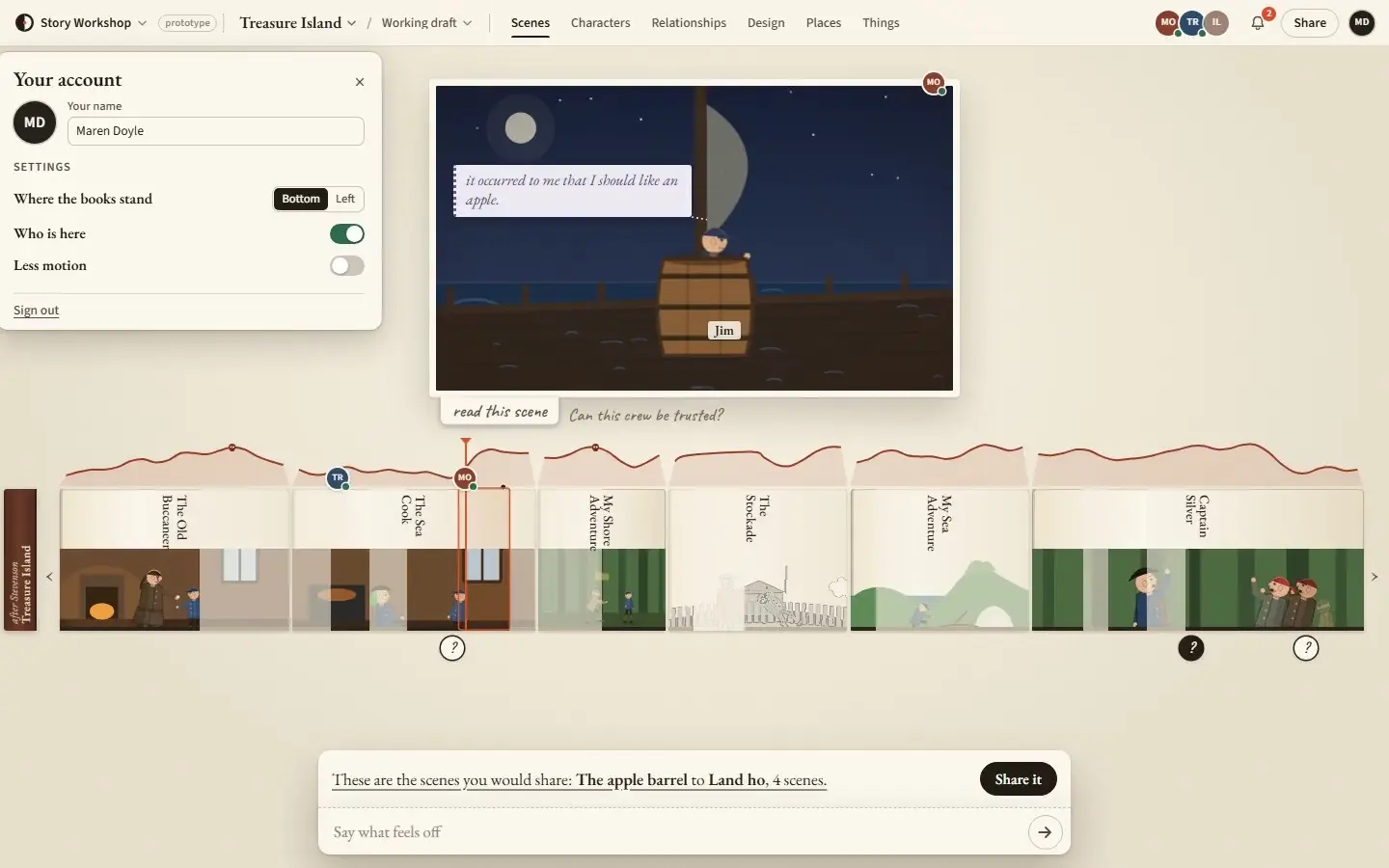
And back under the picture.


For boat designers
Your drawing, reshaped by your words or invented teammates’.

For game designers
How hard each part feels, in invented playtests.

For site owners
Simulated customers walk an invented shop’s site, marking where they’d leave.

For AI-coding teams
Software, drawn: AI-built, but as you intended?

For small carriers
An invented trucking company’s year: try each deal before you sign.
